
A universal truth in commerce, and especially media and advertising, is that you must “follow your audience” for maximum engagement and retention. Today, audiences have more choices for news, information and entertainment, and trying to keep up with them is like herding cats. The trend is particularly troublesome for news outlets, as print editions decrease or disappear. Additionally, the website traffic of news outlets continues to decline for various reasons, the latest being the migration of online searches to AI-powered platforms.
Those trends, along with the billions of social media users and their hunger for video content, are compelling more local media to follow their audiences to these platforms. The strategic move for many outlets to stop audience erosion and strengthen engagement is to create and post vertical videos. It’s a format popular with billions of people worldwide.
Some major news organizations with deeper pockets have been creating vertical videos for several years and are generating significant viewership numbers. For example, The Economist launched its vertical video strategy in 2022, and more than 100 million TikTok viewers watched videos that year. CNN added vertical videos to its mobile app in November 2025. Sports news is ideal content for vertical videos. ESPN’s Verts is one of the many features included in its direct-to-consumer streaming service and an enhanced ESPN app launched in August 2025.
In search of a vertical video strategy
Adding vertical videos to their content mix is more challenging for local news and media because they operate in a highly competitive environment and with limited resources.

According to Angela Kuper Copeland, editor of The Paper in Morganton, North Carolina, incorporating video into its newsgathering operations has been discussed since the first issue was published in February 2023. Understandably, she and her staff have been focused on establishing their brand in the community and boosting readership. Launching a vertical video strategy can require specialized staff, such as social media and video producers, as well as a training program for journalists and editors. The associated added costs are a barrier for many newer news operations like The Paper.
“We are constantly reviewing how news outlets use videos, newsletters and emails to attract readers. No doubt, video can be a great tool. Our first hurdle to overcome is the time involved. The Paper has only local content. There are no syndicated columnists or wire reporting. Each of our reporters writes six to eight stories a week, often 25 inches or longer. Individual stories can take days to come together, leaving less time for shooting and editing video,” Copeland said.

Other news outlets, such as The Salt Lake Tribune, have been proactive in developing strategies and processes for vertical video content. Kyle Hansen initially joined the Tribune staff in 2022 to manage the audience team. One year later, his title was expanded to managing editor of audience and multimedia. That was when the separate audience and multimedia teams merged.
“When I arrived, the audience team was focused on social media, updating the website and producing email newsletters. Our photographers were working in the traditional newspaper space, but we didn’t have any video people, a photo editor or any management. My role has been to give them some leadership and structure and become more digitally focused,” Hansen said.
Today, he manages a team of 11 people. They are creating and producing social media content, video and photography, podcasts, updating the Tribune’s app, SEO and email newsletters. Four photojournalists still provide traditional visual coverage and create some video content. A visuals editor manages them and reports to Hansen. The team also includes a full-time video person and a graphics designer/illustrator.
The Nevada Independent, a statewide, digital-only nonprofit newsroom (known as The Indy), is almost a vertical video pioneer among local media, having created and posted its first in 2018. According to Hali Bernstein Saylor, managing editor, vertical videos became part of the regular news cycle when Justin Stabley joined the staff as social media producer in July 2024.

“Justin brought a much-needed skill set that our regular reporters didn’t have. Vertical videos are almost in every news story. During our document planning session, when we work on headlines and social media posts, we’re also developing scripts. It’s kind of workshopped between the reporters, editors and Justin — a team effort. Now our vertical videos cover everyday events, not just the major ones,” Bernstein Saylor said.
Bringing reporters and editors on board
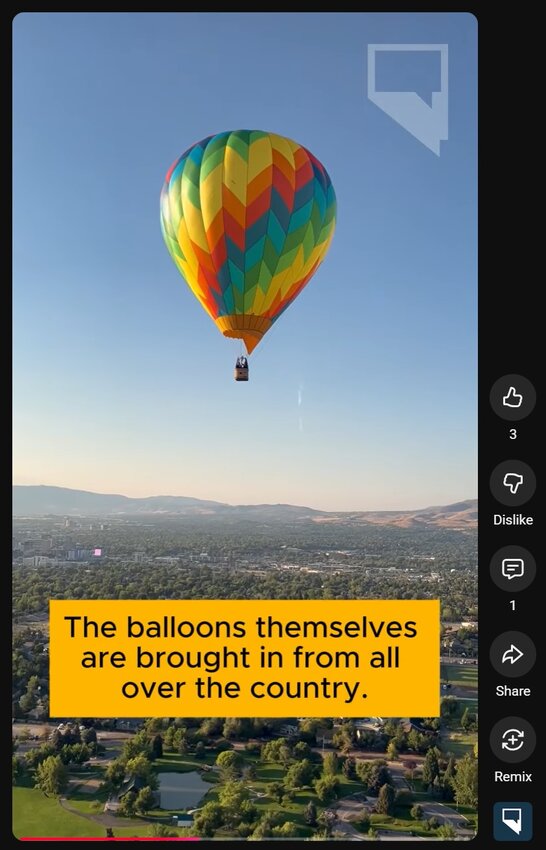
With vertical videos, a relatively new content channel, some journalists and editors are concerned that joining the social media crowd could harm the integrity and standards of journalism. Viewers of local news’ vertical videos may consider them less serious because of the casual nature of social media videos.
As Bernstein Saylor noted, a team effort is critical to a successful vertical video strategy, which requires buy-in from reporters and editors, many of whom have limited experience with video recording. Both Bernstein Saylor and Copeland look for those skills in new hires.
“Reporters who have familiarity with vertical videos would have an advantage over other applicants, but only if they are also excellent writers and reporters. Being adept at video would not take the place of being able to write a compelling story,” Copeland said.

Because Hansen manages a large visual staff at The Salt Lake Tribune, there has been less emphasis on involving reporters in video content, although they do participate when it’s appropriate. Hansen said reporters made a significant contribution last year by identifying opportunities to obtain videos from other sources, such as courts and other local media.
“We’ve discussed having reporters use their phones to record videos, but some people are good with it, and some aren’t. We’ve focused on finding people who are good at it and willing to do it. We want to train them individually rather than executing a big pivot to video and making everyone do video all the time. That process is more likely to create excitement among the rest of the editorial staff and motivate them to record videos,” Hansen said.
Stabley is taking a similar approach with the reporters at The Nevada Independent. He said occasional tutorials help them become more comfortable with the format and start thinking like a video producer, a video editor or even an actor.
“During one of our staff retreats in Las Vegas, I conducted a refresher on general practices for video. How you should light the scene, how to present yourself and even when to take breaths while talking. Many reporters and editors find it hard to have a holistic view of incorporating vertical videos. Coming to an understanding with them about our vision and putting trust in each other about that vision has been very important to creating some good quality video content,” Stabley said.
Finding an audience


A best practice for creating and posting vertical videos is to gather and analyze viewership data from the very first video. That data is critical because a carefully evolved vertical video strategy is more likely to succeed. The data from each video can identify audiences reached but not targeted, and reveal which types of stories gain the most audience traction.
According to Stabley, The Indy’s vertical video audience is widely distributed, but 40-to-60-year-old adults are the “sweet spot.”
“That demographic is the most news-focused, the most news-forward, considering their economic means. They want to keep an eye on politics, especially local politics and local economic issues relevant to them,” Stabley said.
He added that The Indy’s videos are distributed across seven social media platforms. The current strategy is saturation, reaching as many Nevadans as possible to build trust in the Independent as a good community resource.
Social media sites becoming “walled gardens” is another challenge that has stymied Stabley. Links back to a news outlet’s website are buried, and some sites make it difficult to post links to the resources that The Indy and other local news outlets are trying to share with their audiences.


Hansen also has a clear understanding of the Tribune’s vertical video viewership. The YouTube audience is 55+ and heavily male, while the Instagram audience is the opposite: mostly female, 25 to 40 years old.
“We’ve focused our use of videos on social media specifically to reach newer audiences that are not coming to us in print, our e-edition or our website. Videos can boost our engagement with new people, younger people, and give them the news information they need, and quite frankly, they are not receiving now. That’s our role as a nonprofit,” Hansen said.
The bumpy road to monetization
Editor & Publisher’s extensive Revenue Roundup series has highlighted the many alternative revenue streams local news and media have had to add to their financial strategy. Generating revenue from e-newsletters, podcasts and events, for example, is more straightforward than from vertical videos on social media. E-newsletters can be paid subscriptions, with advertisers; podcasts can have advertising sponsors; and events can also have sponsors, patrons and paid audiences.
Although Copeland and The Paper have yet to launch a vertical video strategy, Copeland said, “We wouldn’t add video just for the sake of saying that we did. The strategy would need to be threefold: enhance the written account, engage with those who wouldn’t read the story and drive more print and digital subscriptions.”
Relying on generating revenue from social media sites is another challenge. Based on his experience with YouTube, specifically, Stabley said a video requires either 1 million views or 1 million subscribers to make substantial money. Bernstein Saylor added that, despite brainstorming ways to convert viewers into donors or regular subscribers, The Independent hasn’t yet found any successful methods.
“Monetization was a topic during our early discussion about vertical videos. The consensus was we shouldn’t focus on site monetization for a few reasons. In addition to the large audiences needed to generate revenues from social media sites, the amount from advertising on our pages is minuscule. The second reason is we don’t have control over the type of advertisements on these sites. As a news organization, I’m reluctant to give another site that level of control,” Stabley said.

According to Hansen, the Tribune has generated revenues, especially from YouTube, increasing tenfold from 2024 to 2025, although it’s not yet substantial.
“It’s still not enough to pay for a full-time position, but it’s decent money. That said, we haven’t found any great methods to monetize or attract donations. We recently launched a new tool that lets people donate more directly on Instagram. We’re experimenting with driving donations now that we have some of the video basics down,” Hansen said.
Sharing what they’ve learned
Unlike an e-newsletter, podcast or staged event, which cost time and money and an allocation of staff, starting to create and post vertical videos is relatively quick and easy. Hansen and Stabley agree that news and media organizations shouldn’t be afraid to experiment. They advise trying different delivery styles to determine what works and what doesn’t with audiences. Hansen encourages having fun with vertical videos. That approach may resonate with and attract unattended audiences.
“If a news or media organization wants to try vertical videos, then my recommendation is to find the people in the newsroom who are enthusiastic about videos. They are likely to be video viewers or even content producers on the side. Give them some parameters and some inspiration by sharing what we’re doing at The Nevada Independent and let them give it a try,” Stabley said.
As part of her strategic thinking about the future use of vertical videos, Copeland wants to first determine why adding video is important and how it advances the mission. “Without clearly defining the why, reporters are likely to see vertical videos as one more task to add to their already packed plates. Modern life has made most of us familiar with creating videos on our smartphones, which is helpful. Some informal training and pointers are also needed to integrate video better into what we were already doing well.”
 Bob Sillick has held many senior positions and served a myriad of clients during his 47 years in marketing and advertising. He has been a freelance/contract content researcher, writer, editor and manager since 2010. He can be reached at bobsillick@gmail.com.






Comments
No comments on this item Please log in to comment by clicking here