
Luisa Ortiz Pérez didn’t recognize her breaking point when it happened. At the time, it felt like success.
It was 2006. She was the first Spanish-language editor at Yahoo News in Mexico City, always online, always connected, tethered to her BlackBerry. “My Crackberry,” she called it. “The arrival of the internet was so superbly important for us,” she said.

“I got to do things I never thought would be imaginable. Having access to blogs and social media ... it was beautiful. It was exciting.”
It was also taking something from her that she didn’t yet have language for. “I was detaching from my body,” she said. “The effect of that in my psyche, on my self-esteem, as well as in my relationship with the world, was so profound.”
She also kept going while watching colleagues burn out, fall ill and leave the profession, even as she faced her own health issues and strained relationships. She didn’t stop. Most journalists don’t.
“I could see it in them,” she said. “It would take me years before I saw it in myself.”

During the pandemic, confronting the impact of years of sustained stress, she went back to school to study nursing with a focus on psychological care — a detour that led to the Media Resilience Network (MDRnet). The organization was launched by Ortiz Pérez amid acute strain in U.S. journalism to build culturally competent mental health support systems for journalists.
That urgency is borne out in the data: a 2024 Reynolds Journalism Institute report found 80% of journalists cited burnout as a critical issue, and her network’s findings show similarly high levels of chronic stress. The program offers information, support and training in both English and Spanish.

It has also launched a free, confidential, encrypted helpline, built on an insight Ortiz Pérez developed over time. Journalists rarely seek help during reporting itself, even on traumatic assignments. The need comes later, when the adrenaline drops and they are left alone with what they’ve witnessed.
“Our work begins when the tide is slow, when the dust settles, when the stories are filed, and people are finally alone at home,” she said.
The initiative also partners with affinity groups such as the National Association of Hispanic Journalists and other journalism organizations. They provide coaching and training for both journalists and care providers unfamiliar with the profession’s demands.
Adjusting for a changing landscape

As the field has grappled with these patterns, Dr. Elana Newman has been among the pioneers studying the impact of trauma on journalists. She is the research director of the Global Center for Journalism and Trauma, which continues the work of the Dart Center, founded in the late 1990s not only to study journalism and trauma but to serve as a resource hub for the field.
When this work began, trauma in journalism was narrowly understood. “When we started, people would say, ‘You're talking about conflict reporters, right?’” Newman said. “But we're also talking about police reporters, reporters that cover child abuse and homelessness. We were talking about every journalist.”
The Journalism Trauma Support Network (JTSN), a project within the Center, trains therapists to better understand journalists and connects journalists with therapists at no or reduced cost.

Newman was in Minneapolis this year supporting journalists covering ICE enforcement operations during a period of unrest in which two people were killed. The protests and subsequent reporting unfolded across the city amid heightened tension and included the arrests of journalists Don Lemon and Georgia Fort while they were covering demonstrations.
These conditions are intensifying for domestic journalists in both scale and duration, arriving as layoffs and restructuring have stripped away institutional buffers that once helped reporters recover.
From that work, she recommends that editors managing surge coverage shift to four longer shifts with real days off between them, rather than continuous partial coverage. “You're truly giving people rest,” she said. “Recovery requires real distance, not just shorter hours.”
On institutional support, she has revised earlier guidance around Employee Assistance Programs. “What newsrooms need to do is get good health insurance,” she said. “In years past, we might have said some sort of in-house therapy program, but people need flexibility, and many want to maintain some privacy.”
The Journalism Trauma Support Network fills a gap with journalism-aware therapists available at free or reduced cost, trained to understand deadlines, harassment, moral injury and newsroom culture. A visit to its website showed free sessions were fully booked out for 2026 by early February. Help is still available from the 40 private therapists listed on the site who journalists can reach out to for private sessions.
Bearing more than your share
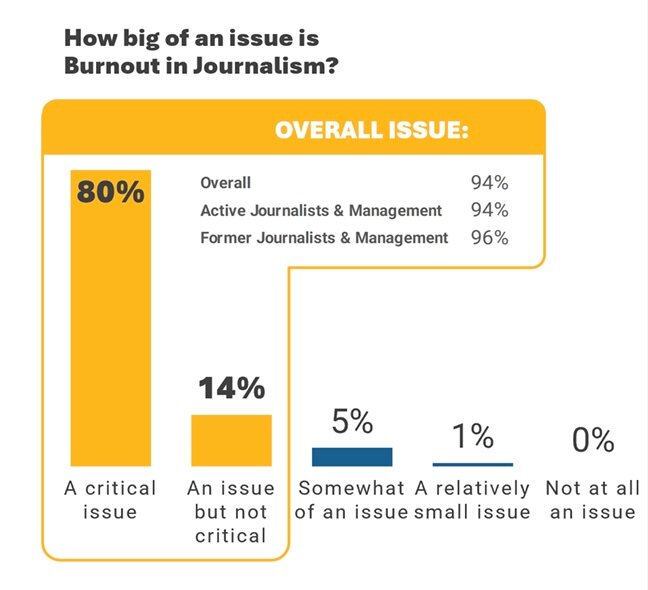
The MDRnet report documents what many wellness conversations sidestep: the deck can be stacked for some.
Designed to reach a broader range of journalists than prior studies, the survey found that women and gender-diverse journalists disproportionately reported burnout, unsafe workplaces and cumulative stress tied to caregiving, financial strain, harassment and discrimination.
Latine journalists connected their emotional safety to political conditions — immigration enforcement, press freedom erosion and DEI rollbacks — that threatened both their work and their communities. Black American journalists cited newsroom culture and the lack of culturally competent providers as major barriers.
That gap extends beyond the newsroom and into care itself, Ortiz Pérez said. “We're exhausted having to explain to other people why journalism is what we do,” she said. “We're exhausted by service providers who recommend that we open a bakery. People who don’t understand our race, our gender, who don’t speak our language. People who don’t speak ‘journalist.’ We're meeting people in a culturally competent way.”
Newman noted that journalists who identify closely with the communities they cover — reporting on raids that touch their own families, covering crises that are also personal — face an additional layer that the profession has been slow to acknowledge. “When you really identify with the story,” she said, “it can make it harder to take the breaks the work requires.”
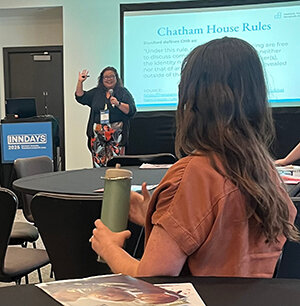

Emma Carew Grovum has worked in legacy shops, big digital and nonprofit newsrooms and experienced this from the inside. As a young journalist of color in a legacy newsroom, she spent significant unpaid time building what institutions would not — diversity pipelines, mentorship and advocacy for overlooked colleagues.
“I often think about what I could have achieved if I had not been burdened by systemic racism,” she said.
That experience shaped a conviction she has carried since: The networks journalists build for each other often outperform anything an employer provides.

As a coach and newsroom strategist, she founded Kimbap Media, a consulting company focused on helping newsrooms better meet their teams’ needs while recognizing the added burdens some people may face.
“Over the last couple of years, there has been a shift in what employees expect in terms of duty of care for mental health and physical and digital safety. … There’s this huge gap between the people who came up through the school of hard knocks and just went to have a beer on a Friday,” she said. “Younger generations are asking a lot of really good questions about what they can expect, like ‘Are they going to fish us out of that hole?’”
When the institution crumbles
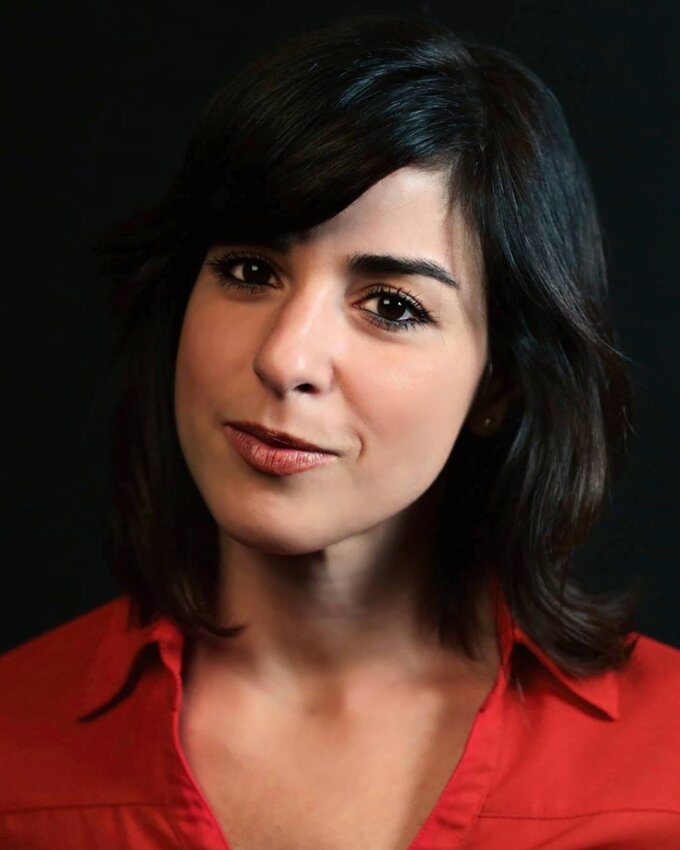
The loss of institutional support is not only felt by journalists from marginalized communities. It is the defining experience of the growing freelance workforce, and it has a specific shape.
Natasha Del Toro is an independent correspondent, producer and podcast host with seven Emmy nominations and one win. She’s spent nearly a decade as a highly in-demand journeywoman: working as a correspondent for Al Jazeera’s documentary series “Fault Lines” for eight years and as a regular host for the outlet’s podcast “The Take.” She’s also been a correspondent for More Perfect Union, and she’s freelanced for Scripps, Fusion and PBS.
She has covered ICE enforcement in Latino communities, reported from Haiti and documented the aftermath of hurricanes Milton and Helene, which so severely damaged her Florida town that she couldn’t live in her home for a year.

“I’ve covered a lot of different, very difficult stories. I’ve learned so much. I’ve gotten to meet so many extraordinary people,” she says. “On a good day, I want to think it’s important and making a difference.”
She also knows what institutional support looks like. She worked at the Tampa Tribune and spent years working as a staff person at Time Magazine, where she covered the 2010 Haiti earthquake. Del Toro said, while covering that kind of humanitarian crisis can be very difficult, she had support, “There were so many people looking out for me, and when I came back, they provided mental health services,” she said. “I felt like I was being cared for.”
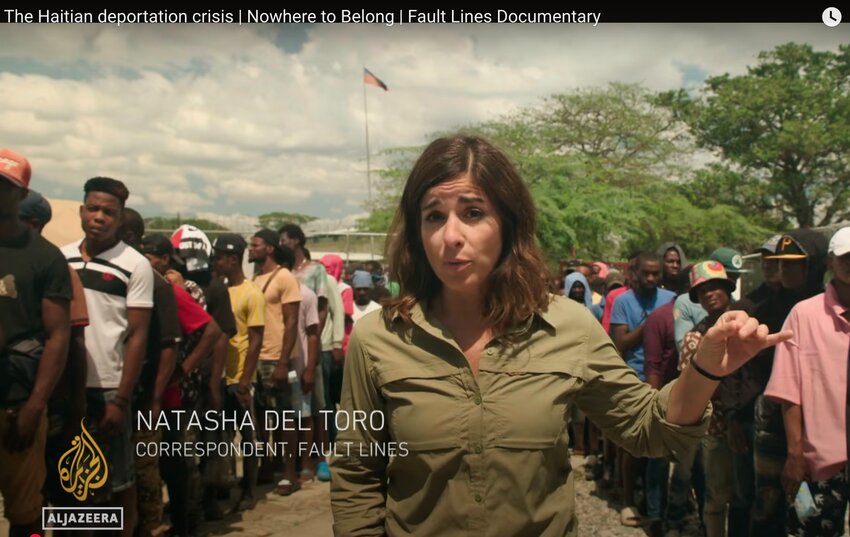
As a freelancer, that support is inconsistent: hazard pay, follow-up care and insurance are rarely available, and she said stigma discourages journalists from seeking help.
“As a journalist, you don’t want to be perceived as weak,” she said. “If it seems like you need therapy, maybe it makes you look like you can’t handle it, and then you’re not going to be put on an assignment. No one can afford that right now.”
What she misses most is the sense of team — what a newsroom can provide in terms of support.
During a recent assignment in Washington, D.C., she stayed several extra days to meet two colleagues she had worked with for years, but only through Zoom and Slack. One evening together did more than months of digital check-ins on specific tasks.
“It was so great to connect,” she said. “It’s so much harder to build relationships this [online] way. It’s all the stress … without the camaraderie.”

Aaron Glantz, a two-time Peabody Award-winning journalist who reported in Iraq and on veterans, has studied the similarities that face soldiers and journalists. He is a practitioner fellow at Stanford's Center for Advanced Study in the Behavioral Sciences, working on a book on the topic.
Military research consistently shows that unit cohesion improves mental health outcomes, a lesson journalism has lost as work becomes more fragmented. “We used to rely on employers to build that. Now — even in large newsrooms — you’re in a state of knowing that things can change,” Glantz said. “Imagine being deployed to the Vietnam War by yourself. That's how journalism feels right now.”
He argues journalism can still build resilience through mission-driven work and peer networks organized around shared beats and shared purpose.
“People that validate you and tell you that you matter and help you see your power as a journalist — rather than just mitigating the worst parts of the job,” he said. “We want a reason to stand tall. We are natural storytellers. We have to make a story about ourselves, and a good network around us.”
What solutions and adaptability can provide
As director of careers and culture at The Marshall Project starting in 2022, Carew Grovum turned her conviction about peer networks and care into policy.
She helped lead a policy overhaul that expanded leave, increased work flexibility and made mental health an explicit part of workplace support, including creating a program for employees who need time off if a pregnancy fails. “I statistically know that somebody will need it. And I’m glad it’s there for them,” she said.

They built a culture of trauma response in the newsroom. When the video of the fatal beating of Tyre Nichols by police was released, they sent advisories to the staff about which Slack channels to use for the video to keep other channels clear, and reminded everyone to disable autoplay on their phones to avoid seeing it inadvertently.
Carew Grovum also emphasized the importance of everyday practices — encouraging journalists to step away when needed, even under deadline pressure. “You always have 20 minutes between now and your deadline to close your laptop, go for a walk and get some sunshine on your face,” she explained.
On her office wall, she keeps an evidence board — thank-you notes and messages from people she has helped. On hard days, it serves as proof of accomplishments. It’s something Carew Grovum said is important for managers and editors to do for themselves as well: “Burnt out people lead to more burnt-out people,” she said.
At The Globe and Mail in Toronto, a long-standing focus on trauma and care has been built into the newsroom over time. Executive Editor Angela Pacienza has spent more than a decade helping shape an environment where mental health is treated as an operational priority, rather than an afterthought.
The effort, she said, has been led by Editor-in-Chief David Walmsley — a commitment from leadership that has enabled it to be sustained.
“If people burn out and crash,” Pacienza said, “they’re not going to be of any use as employees. It’s the caring part, but it’s also just good for business.”
Central to that investment has been a long relationship with Dr. Anthony Feinstein, a neuropsychiatrist at the University of Toronto who studies moral injury in journalists. He has conducted on-site trainings with Globe staff on trauma and mental health.
“He has taught us a lot about PTSD that happens from covering things,” Pacienza said, “especially our photographers, who have to look at photos of dead children, bombed-out places and refugee camps. We've always looked at that as something we must help our staff with.”
The newsroom has also brought in the Global Center for Journalism and Trauma for manager training and built in decompression time after difficult assignments.
The Globe has also rethought what kinds of journalism serve both its audience and its staff. Reporter Erin Anderssen spent 15 years covering mental health before proposing a shift: a happiness beat, applying a solutions-and-wellbeing lens to nearly any story.
“I noticed exhaustion, not just among readers who were hungering for more positive stories, but in myself as well,” she said. Years of covering policy failures and rising mental health crises had worn on her relationship to the work.
The response has been striking. Year-over-year unique visitor growth reached 43% in January 2026 and ran as high as 160% in earlier months. Pacienza said the lesson is clear: The same burnout pushing journalists out of the field is also driving readers away. Addressing one can help address the other.
A future built for us
The MDRnet report lays out what journalists are actually asking for: not resilience tips or EAP referral programs. They want affordable, culturally competent, journalism-aware care and the time and income to use it.

For Natasha del Toro, the question is ultimately about whether the profession itself can hold up under its current weight. “I do think that the journalism industry in general needs some level of reform,” she said. “We’re in this transition: legacy outlets are changing, television is shifting, and there are massive structural changes happening. Hopefully, we land on something more humane, because journalism is important.”
MDRnet now organizes peer gatherings in regions across the country, structured around conversation rather than clinical intervention, to build a more connected community of support.
When asked if there are safe ways to do this work and stay in it, she doesn’t hesitate.
“I don’t think the problem is journalism itself — the problem is friction, and it’s friction with our own humanity. Most of the tools we use are our hearts, our brains, our hands and our mouths. They are profoundly human, and therefore profoundly vulnerable,” Ortiz Pérez said. “You need to wear your heart to do this work, but not alone. You need a community that holds you when you come home.”
 Diane Sylvester is an award-winning 30-year multimedia news veteran. She works as a reporter, editor and newsroom strategist. She can be reached at diane.povcreative@gmail.com.




Comments
No comments on this item Please log in to comment by clicking here