
On Jan. 31, the federal government quietly removed a suite of public health datasets from Centers for Disease Control and Prevention (CDC) websites, leaving researchers, journalists and local officials scrambling to adapt.
A notice appeared on the website stating that access would be prohibited until the data complied with the new Trump administration executive orders. These orders outline rules to limit the collection and sharing of demographic information related to gender, sexual orientation, racial equity and diversity, equity and inclusion.
What happened at the CDC was not an isolated incident. Across federal agencies, datasets have been altered, made harder to access or taken offline entirely. And now the federal government shutdown is adding to a hole in data collection and sharing by federal agencies, with consequences rippling beyond academic research to affect public health monitoring, disaster planning and community accountability.
For Denice Ross, a longtime advocate for data-driven public service who had recently left her role as U.S. chief data scientist for the Biden administration, the January actions sounded an alarm.
“Most of the really great resources out there — whether on health, housing or disaster response — depend on federal data. When you remove demographic fields, you make it harder to identify which communities are being left behind or overburdened,” she said. “And there are many risks that just compound when we can’t see what’s happening.”
Ross, who now serves as a senior advisor at the Federation of American Scientists, said the episode reminded her of what first drew her to becoming what she calls a “data advocate” during her years in New Orleans, working to ensure communities had the information necessary to improve public health outcomes. She said her work there post-Katrina made her realize how important data was to helping communities get the services they need in real time.
“That was the moment when I shifted from being a data user to being a data advocate, recognizing that we needed timely, accurate, detailed data to chart a path toward a more equitable recovery,” she said.

Ross said the stakes are high right now as federal data and research have diminished across constituencies, including the tracking of maternal and infant health, veteran suicide prevention and emergency services.
“DHS used to have a single source for all these basic layers needed for emergency management. They canceled that collection, and now emergency managers have to remap hundreds of layers directly to agency websites. That’s brittle, and they won’t know the layers are broken until they’re in the middle of an emergency. This shifts the burden to local communities,” she said.
Ross launched Essential Data, a website that collects stories, or case studies, from people about how federal data has had an impact on their lives. An examination of the database reveals how Department of Transportation data was utilized to support the case for establishing direct flights from smaller airports to locations with medical facilities, thereby enhancing cancer treatment and improving a federally supported suicide hotline.
“We benefit in so many different ways from federal data, like ways that if the data disappears, we won’t even really know what happened, but our lives will be a lot worse off,” she said.
Losing the tools
Even when datasets remain technically available, federal tools and platforms used to access many of them have been quietly dismantled. Tools once designed to make complex data accessible, such as dashboards at the Bureau of Labor Statistics and NOAA’s disaster compilations, have been taken offline or left unmaintained. Staffing shortages and stalled budgets have further slowed data releases.
In October 2025, the Bureau of Labor Statistics (BLS) was unable to publish its monthly employment figures due to the partial government shutdown, creating a rare void in one of journalism’s most consistent economic indicators.
Ross noted that while wholesale datasets are seldom deleted, the disappearance of tools changes who can realistically use them. “It takes more time and expertise to access the information that the federal government is producing,” she said.
Cheryl Phillips, the founder and co-director of Big Local News, a project at Stanford University, echoed that concern. She has been helping local newsrooms tackle data projects and collecting datasets since 2014. She is particularly concerned about how strapped local newsrooms will be able to report on essential data that matters to their communities.
“When you lose the tools, you lose the usability. Many journalists lack data engineers or analysts on staff, relying on these interfaces to make sense of what’s happening. If you take away that layer, the work becomes exponentially harder,” Phillips said. Big Local News collects and curates public data, making it accessible and creating frameworks that other local newsrooms can plug into.
Her team has built systems to help local reporters identify stories, analyze trends and produce reporting even when federal data tools disappear. They collaborate with academics and national outlets to help local newsrooms tell data-driven, impactful stories about their communities.
Phillips said her greatest worry is what happens when the federal government stops collecting certain kinds of data altogether. She said she’s been particularly focused on what might happen to Census data collection and access to existing datasets that journalists use regularly, which helps community reporters better understand the demographics in their regions.
She also pointed to the Bureau of Labor Statistics situation as raising special concerns, “The fact that they’ve stopped even collecting some data — that’s where I have the real fear. It’s bad when they take something offline and it was on the web and easily accessible, but if the data is still there, I still have a little hope,” she said.
She added that while some information might be salvaged through state or local efforts, the loss of federal data collection infrastructure creates deeper damage. She said Big Local News regularly collects state data about layoffs and sends it out to newsrooms, but she admits that the data isn’t as comprehensive as what BLS collects.
“If there are other ways that organizations in other jurisdictions are collecting that data anyway, because that process is built, I think there are ways for us to integrate with that,” Phillips said. “But where the federal government says we’re no longer going to collect this data, or like we have now — it’s a government shutdown — so they are not going to go do this survey, then that’s a problem, because it’s just gone. And so that’s what gives me the most stress at night. It’s that. It’s the lack of collection. Because if they stop collecting, then there’s just nothing we can do.”
Preservation and access efforts
To fill the gaps left by disappearing federal datasets, several initiatives have emerged to help journalists, researchers and the public find, preserve and analyze essential data.
The Data Rescue Project, launched in February, functions as a repository for federal datasets maintained by volunteers who download and archive at-risk government data before it disappears. The Journalism Resource at Harvard Kennedy School curates and maintains updated links to state and local datasets that can substitute for federal sources. Other tools provide different forms of access: the Harvard Dataverse hosts archived research datasets, the Wayback Machine at the Internet Archive captures snapshots of government websites before they're altered, Restored CDC recreates removed health data interfaces, and environmental datasets maintained by EDGI preserve EPA information.
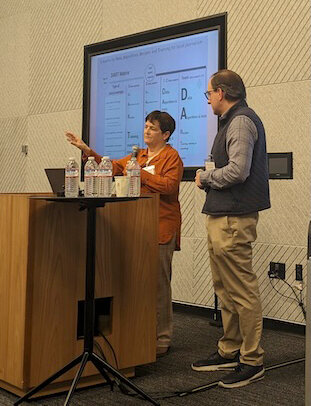
Phillips said the work being done at Big Local News has never felt more critical.
“We’ve spent a considerable amount of time collecting the cancelled federal business contracts, pulling in contracts data, and we’re building training and creating our ‘recipes’ for local newsrooms so that they can find their local story in that somewhat cumbersome data,” she said. “And then we’re identifying slices of that data from those contracts that could lead to a good, targeted story that a lot of local newsrooms could do.”
Who gets counted and who doesn’t
In many cases, the changes are subtle but profound. The administration’s interventions have not only removed datasets but also stripped or altered fields related to race, gender and sexual identity, hindering the ability to track systemic inequities.
In a recent article in The Objective, Nik Usher, an associate professor at the University of San Diego who studies the media and news, framed the loss of government data as both a cautionary tale and a moment for self-reflection in journalism.
“Choosing not to collect and make public data about these identity groups doesn’t just inhibit our ability to analyze or produce knowledge about them — it effectively erases their existence in records,” Usher wrote. “The known becomes unknown and uncounted.”
Usher urged journalists to consider not only what is missing in government data but also how newsrooms themselves have historically undercounted, underrepresented or misrepresented communities.
Phillips said Big Local News has been thinking about this issue, particularly with their work on parsing a dataset of federal contract cancellations. She said this summer, an intern working on the project found a way to add contextual information to the data to look at services to the Indian Health Services, helping them do some unique reporting on how federal cuts are impacting Native communities. The team is now working on how to teach other local newsrooms to tap into this dataset to look at their own communities.
“People who go uncounted have a hard time getting the services that they need,” said Phillips. “If you’re not going to count them, then you don’t have to provide service to them. That’s why local journalists play a crucial role in making these populations visible again. The work we are doing can help local newsrooms do more for their communities.”
Building an independent data infrastructure
For Phillips, the hollowing out of federal data may present an opening for local newsrooms. She noted that, despite relying heavily on federal datasets, most of the information actually originates closer to home.
“Much of federal data comes from the states, and if it’s coming from the states, it might even be coming from the counties, to the state, to the federal government,” she said. “So, I think the trick is to identify what that data is, and then do a collaborative effort to go get that data.”
Phillips sees an untapped opportunity for local newsrooms to become data hubs — gathering, maintaining and even monetizing data that serves their communities.
“It’s valuable for stories, but it’s also valuable because newsrooms are increasingly looking for ways to bring in other revenue,” she said. “I’m not seeing any reason why they couldn’t each be a data hub for their local community or their state. There’s real value in the data, and I don’t think it’s been fully recognized — especially depending on what you do with it.”
Some local outlets are already moving in that direction. Phillips pointed to Black Voice News in California's Inland Empire, which was recently profiled in E&P for its innovative approach to serving its community using data. The organization has a distinct data unit that has developed independent datasets and analysis tools. That initiative uses data visualization to explore racial inequities and systemic gaps across the state. As a result, it has become both a local resource and a model for other community media.
Phillips said BVN is a model for how it has built its data initiative as a service provider for its newsroom and as a for-hire data outlet for other organizations. “The Black Voice News operation regularly does other reports out of the data that they have for non-journalism organizations,” Phillips said. “That’s one of their revenue streams. It’s a model for what newsrooms could be doing.”
While she acknowledges that “the state of especially federal data is not good,” Phillips said she’s choosing to look at the moment as “an opportunity for us to figure out what we can stitch together.”
“For me, the first level of focus is, we’ll just make a story — something we can share out that local newsrooms otherwise wouldn’t be able to tell,” she said.
Phillips identified three distinct models of collaboration that are emerging to address data gaps. The first is what she calls “national to local,” where large news organizations conduct major investigations and then share their underlying data for local newsrooms to produce community-specific stories. The second model pairs academia with journalism, where researchers bring analytical expertise while journalists provide storytelling and community connections. The third is “local to local to national” — where multiple newsrooms collaborate to identify patterns across communities, as Big Local News did with a recent fentanyl crisis project involving the Baltimore Banner, The New York Times and nine other newsrooms.
“I think the more we can facilitate and support local newsrooms to write stories about the impact of what is happening, then the more that will help,” Phillips said. “It will help create a more informed community that can then raise their voices if they want to.”
Looking ahead, Phillips envisions expanding this collaborative infrastructure where journalists across the country collect and share key datasets from local and state agencies — building what amounts to a national data common for public-interest reporting.
“I would love to build a system that would make it really easy for a local journalist to deposit a local dataset and maybe even get some kind of compensation for collecting it,” she said. “And then, if they clean and normalize it in a certain way, they get extra funding. That would be amazing. And then we can knit it together, and we have this big national dataset that otherwise would be unavailable.”
But Phillips acknowledges the obstacles ahead. Building such infrastructure requires resources that most newsrooms lack, sustained collaboration across organizations with competing priorities, and consistent data collection standards that don't yet exist.
And the window for preserving some datasets may already be closing. Once federal agencies stop collecting specific data — as BLS did during the shutdown — no amount of collaboration can recreate what was never gathered. The volunteers archiving datasets, the newsrooms stitching together state-level information, and the academics partnering with journalists are doing critical work. But they’re racing against an erosion they can’t entirely stop.
“If they stop collecting, then there’s just nothing we can do,” Phillips said.
 Diane Sylvester is an award-winning 30-year multimedia news veteran. She works as a reporter, editor and newsroom strategist. She can be reached at diane.povcreative@gmail.com.






Comments
No comments on this item Please log in to comment by clicking here