
DEI (Diversity, Equity, Inclusion) has been a quest for news organizations that aim to create newsrooms and leadership teams that are more diverse, value different perspectives and better reflect the communities they cover. Many revamped hiring practices and sought out new talent pipelines. Although the resulting changes were slow to come, the conversations around DEI inspired the entire news media community to also consider how to be more intelligent, intentional, fair and equitable in story selection and sourcing.
But DEI, as an ideal, has come under attack. It has been batted around by politicians and pundits and considered by the highest court in the land. In June, the U.S. Supreme Court decided the case of Ames v. Ohio Department of Youth Services, a “reverse discrimination” case in which they sided with the plaintiff.
Michelle Travis reported on the ruling for Forbes. “Although Ames did not involve a DEI initiative, reverse discrimination claims have become the go-to legal tool for challenging corporate DEI programs,” Travis explained in a June 11 article.
The president also targeted DEI policies by way of an Executive Order (EO). He leveraged EOs to dismantle DEI initiatives at government agencies and contractors, and to terminate equity-related grants and contracts.
On the advice of counsel, the Public Broadcasting Service (PBS) opted to shutter its DEI offices and lay off staff following the issuance of Executive Orders by the president.
DEI advocacy
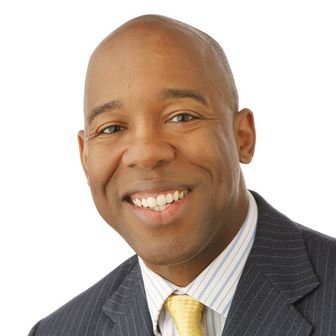
Larry Graham was seeking a new career challenge — a role that aligned with his values and morals — when he established the Diversity Pledge Institute.
“We have two primary functions. I would call us a journalist-support organization and a journalism-support organization. There’s a distinction here, as we aim to help and support as many journalists as possible, and we also assist newsrooms and media companies in identifying a diverse slate of qualified candidates when they have openings. Finally, we help them create a more inclusive work environment for these candidates once they get there,” he said.
One issue that has plagued the news media community is a lack of transparency and data regarding hiring and retention efforts.
“A lot of companies don’t have retention data,” Graham found. He recalled presenting at a recent conference and asking the audience to raise their hands if their companies tracked retention data. Only three hands went up.
The political climate has made conversations about DEI challenging for advocates like Graham, who said the term “diversity” in his organization’s name is now polarizing.
“It’s been politicized to such a harmful degree. I feel like, no matter what, my outreach — whether it’s emails or phone calls — and the responses I get now, versus a year ago, are significantly lower. And often, I get the unofficial response, ‘We’re taking a wait-and-see approach to hiring, but maybe we can have some discussions about collaborations in six months,’” said Graham.
Graham’s views on DEI haven’t changed, but he’s surprised by how quickly fear has taken over.
“If we’re going to simply rely on the same business model created by the same people in journalism over the decades — over the past 100 years or more — that is not going to lead to the innovation we need to see in journalism, so that it can be sustained,” Graham suggested.
“We’re looking for media companies, our news leaders, to stand up and say, ‘Hey, diversity does still matter.’ Stand up for the principles you say you value. … It’s going to be difficult and time-consuming, but I hope people don't give up the fight,” he concluded.

E&P also reached out to Yaneth Guillén-Diaz, executive director at the National Association for Hispanic Journalists, to better understand how the organization and its members are navigating DEI.
“The news industry has made some progress toward becoming more representative of the U.S. population, though the fact that most media companies won’t report on staff diversity shows it’s not where it should be,” Guillén-Diaz replied in an email. “The most glaring weakness is at the senior management level. That’s a key reason we launched the NAHJ Adelante Leadership Academy in 2023 — to prepare Latino journalists to be the best-qualified for executive leadership positions.”
“For 41 years, we’ve been fighting for more Latinos in news, to uplift our members and ensure full and accurate coverage of Hispanics in the U.S.,” Guillén-Diaz added. “Our partners, U.S. media companies, realize that it’s good business to deliver a news product that informs and engages a demographic with $3.6 trillion annual buying power.”
But there have been barriers along the way.
“Some of the toughest obstacles to building newsrooms that reflect the communities they cover are economic,” Guillén-Diaz explained. “If a young person from a working-class family sees themselves as a journalist and makes their way through college, they’ll discover that most internships and entry-level positions are in expensive cities, like New York, and often don’t pay enough to live on. Young people in that situation are disproportionately people of color.
“We’ve also seen the waves of layoffs running through the industry set progress back,” she continued. “For example, when the [Los Angeles Times] laid off 20% of its staff in 2024, journalists of color were disproportionately affected, because many were among those most recently hired. That happened despite the fact that the [Los Angeles Times] workforce was still short of a workforce that reflects Greater LA’s nearly 50% Latino population.”
Guillén-Díaz said that she has seen diversity initiatives ebb and flow like political tides, yet most businesses find ways to embrace DEI because it's good business.
“NAHJ’s goal is simple: We want our members to be the best qualified for any job that opens, regardless of race or ethnicity,” she affirmed.

“Diversity, equity and inclusion in the news industry can include a number of components — who reports the stories, what stories are told and how communities are involved in representing themselves,” Karen Rundlet, executive director and CEO of the Institute for Nonprofit News (INN), said in an email to E&P. “At INN, we see the future of news as one that more fully includes the realities of everyday people in communities large and small. Timely, accurate information should be accessible to everyone, regardless of their ability to pay for it.”
INN conducts a membership survey, known as the INN Index Report, every two years. The survey asks “in-depth questions about programs designed to encourage racial, ethnic and gender diversity,” according to INN’s Communications Director Sharene Azimi. “The questions looked at staffing and operations, communities served and funding received,” Azimi explained.

The 2024 Index Report is still in development, but Azimi shared some preliminary data. “At news outlets in INN’s sample, 53% of executives are women. This seems to run counter to media industry trends. A recent Reuters Institute study of top editorial positions showed that women hold only 38% of these jobs, and their presence has dipped in recent years,” Azimi reported.
“Across the entire INN network, respondents reported that three in 10 staffers are people of color, reflecting the composition of the U.S. population,” she added. “About 60% of newsrooms said that covering communities of color is either the primary mission or one of several core priorities.”
Staying on the right side of the law

Camille Olson is a partner with Seyfarth Shaw LLP and a member of America’s Newspapers board of directors. This spring, she spoke with news media publishers at America's Newspapers’ conference about DEI as a legal matter.
“There have been a lot of legal developments — in particular, three Supreme Court cases — and then obviously changes in terms of the president and his administration’s enforcement policies,” Olson said to E&P.
“In the most recent case, the [Ames v. Ohio Department of Youth Education] case — written by Justice Jackson, who is widely regarded as the most liberal justice on the Supreme Court — the decision was unanimous. She wrote about the fact that Title VII prohibitions don’t draw distinctions between how you can treat members of the majority group and minority group, and that any effort to combat historical injustice has to comply with the cardinal rule that everyone is equal and everybody has protected statuses,” she explained.
“Title VII protects individuals, not protected status,” she continued. “So, anytime you categorize somebody by the protected status they’re in and they receive either preference or they’re segregated by that status, or have a detriment because of that status, that’s not consistent with Title VII.”
Olson said the Trump Administration is targeting “illegal DEI” practices.

“DEI initiatives that are not fine would be the ones that give a preference to somebody because of their status in a protected group. DEI initiatives that are not fine would be ones that segregate employees based on a protected status. A good example would be hosting a leadership program just for women. … So, segregation, preference or a detriment that an individual is subject to because of their protected status is illegal DEI.”
Despite the legal questions and shifting sentiments, Olson said she hasn't seen companies in the media space abandoning their values of inclusion, belonging and equal opportunity. They simply want to understand how to achieve those goals lawfully.
“This is an area where more boards of directors than ever are looking for continued updates, not just on the state of the law and the state of enforcement policy, but what it all means in terms of their own companies’ practices,” Olson added.
All news organizations can kickstart their discussions by asking: “What are our values? What are our priorities for inclusion, belonging, diversity and equity? Then, what is our risk profile? Audit your initiatives, practices and policies, and use lawyers to do so,” Olson advised. “This is complicated stuff.”
 Gretchen A. Peck is a contributing editor to Editor & Publisher. She's reported for E&P since 2010 and welcomes comments at gretchenapeck@gmail.com.





Comments
No comments on this item Please log in to comment by clicking here