
The phrase “The long and the short of it” began with Shakespeare.
It’s still used sparingly today, some four centuries later. If you say, “Well, the long and the short of it is that my Amazon package was stolen from my front porch,” what you’re saying is that there is a long story I could tell about this thief and that box. It’s quite funny and scary, actually. But it all comes to the same conclusion: I got robbed.
In journalism, the Shakespearean phrase could be taken literally and figuratively.
Journalism can be a single sentence in a social media post that breaks important news or shares critical information with the public. It could be a 60-second vertical video that advances a story. It could be a two-minute report on the nightly news. It might be a 1,000-word story with several sources. It could be a series of articles over several days. A podcast. Or even a full-length documentary.
The professors and instructors at the University of Southern California-Annenberg School for Communication and Journalism have built an ecosystem that respects the entire spectrum. The long and the short of it is they know the long and the short of it.
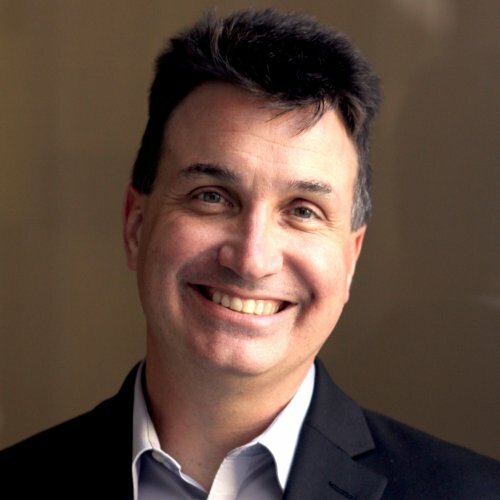
“I teach our introduction to news literacy class, and one of the things that I do is help them recognize that there's a lot of media that’s not journalism, and that's okay, but getting them to understand what journalism means,” said Gordon Stables, director of schools for the Annenberg institution.
Journalism at USC-Annenberg is taught in many forms, all anchored in ethics. But it’s more than content diversity. The school partners with other organizations to offer students real journalism opportunities, and it boasts one of the more impressive physical newsrooms on any campus in the country.
All this adds up to a dynamic learning opportunity for college journalists, planted within one of the largest media markets in the world, and all at a time when one of the most important stories of a generation barks at their city’s doorstep.
For what it’s worth, no matter what form the journalism takes, pepper spray stings just the same. Several students at USC-Annenberg have already learned that lesson.
Meat, potatoes and TACO

Amara Aguilar, a journalism professor at Annenberg, stays busy teaching courses across the journalism spectrum. Aguilar came from local journalism. She teaches general journalism courses, as well as a handful of more narrowly tailored classes. At different times, she has taught emerging technology platforms, social media storytelling for Latinx audiences, visual journalism, engaging diverse communities and public relations strategy, among others. She co-founded Annenberg Media’s outlet Dimelo, focusing on Latinx audiences.
More recently, she has introduced her students to a scrappy non-traditional community journalism outfit named L.A. TACO.
L.A. TACO is an independently owned media platform that brings “street-level news stories that often cover L.A.’s most marginalized communities, stories that other publications wouldn’t dare cover or don’t have the credibility to report on,” according to the organization’s About page. It was founded in 2006 with a desire to document the things “we love about the city.”
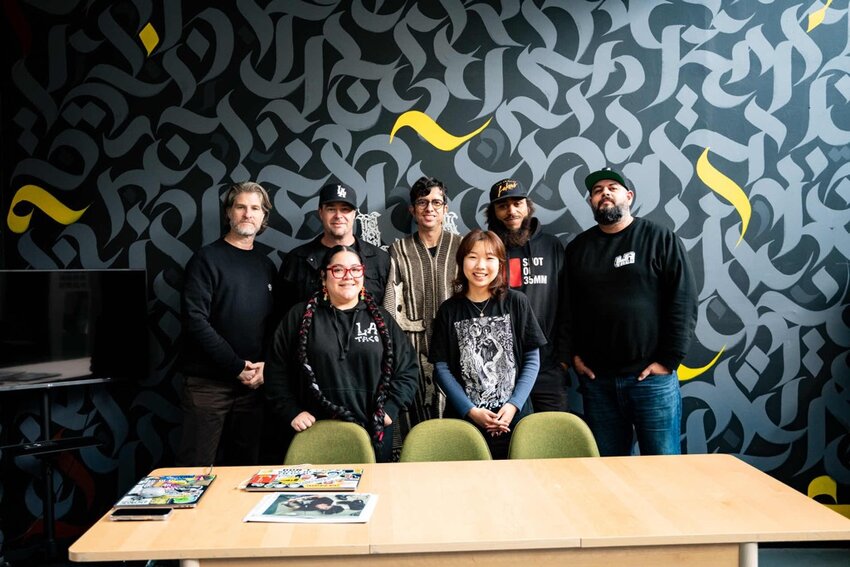
Over time, the site has evolved into a news outlet, albeit occasionally in a spicy, irreverent style. One headline on the site reads, “LAPD replaces ‘less-lethal’ gun ‘known to maim people’ with another ‘less-lethal’ gun capable of doing the exact same thing.”
Despite the cheeky headline, the article is informative and important and includes the perspective of a woman who was shot in the face by one of the projectiles at a protest. The story included a photo that showed the gash on her face and told the extent of her injuries, sustained when lawfully protesting.
“In the fall semester, I taught a new class called ‘Bridging the Gap between L.A. Influencers and Independent Journalists,’” Aguilar said. “This was a collaboration with L.A. TACO, and I co-taught that class with the editor of L.A. TACO, and it was really incredible. It was a chance to bring content creators from L.A. who serve the community through their information gathering and recording, and to bring some of those content creators into the classroom to speak to journalism students. Our students interviewed several content creators and journalists and also created what we called hybrid stories. So, it was text stories with matching content creator-style videos for social media, bringing these two areas closer together.

“It was very collaborative, very much centered on community and hyperlocal storytelling, but centering that with good journalists, solid journalism, solid storytelling and then creating these content creator style videos that really kind of speak genuinely to our audiences and communities.
“This class was just a way to … bring people together to learn from each other. And it was an amazing collaboration with L.A. TACO, which has been an amazing partner with USC Annenberg over the last several years on several projects.”
Part of Aguilar’s teaching focuses on in-person journalism. That’s a lesson she learned in her career, and one L.A. TACO is demonstrating in real time.
Her Engaging Diverse Communities course, which is required, “focuses on engagement, and I think that’s central to what we do as journalists. So, with that class, we focus on both digital and in-person community engagement. Human-centered interviews and community listening, planning and developing community events, working with communities to create stories. All of those things are really important.”
The news center
Nearly every television news production station in the U.S. would love to have the newsroom that students at USC-Annenberg use. Called “the heartbeat of Wallis Annenberg Hall,” the facility serves as a newsroom, classroom and incubator. It’s a space with a television production studio and built-in seating for instructors to sit beside students as they learn to produce a show. It also has plenty of space for journalists to create content in different forms — in multiple languages, by the way.

Christina Bellantoni teaches several courses at USC-Annenberg. She teaches a basic reporting class, a political reporting class and the capstone class, where students showcase all the skills they’ve learned in the major, such as an in-depth multimedia piece.
But she also has the pleasure of running the Annenberg Media Center.
“It’s this beautiful, very high-end, modern facility, with the broadcast capability being a big part of that, but also putting all the journalists in one place so they can have multi-platform coverage,” Bellantoni said. “Effectively, it is a learning lab. The students are required to work there for two semesters during their undergraduate journalism program, and our graduate program also requires them to work there. And they produce a four-day-a-week television show called Annenberg Television News. They produce a four-day-per-week radio show that is Annenberg Radio News. And then they do the USC-Annenberg Media website with robust news coverage of everything happening on campus, in and around L.A. and also on social media.”

Of course, all this journalism means a lot of hard work and growing up fast. The students have covered student protests of the war in Gaza, in which students were arrested — a story that student reporters were live-streaming at 4 a.m.
Some students have been exposed to tear gas while covering protests, she said.
“So, it ends up sometimes be really big, and it gives them very, very tangible, practical experience that they can take into the industry, but also those leadership skills and life experience, and more basic things, like meeting a deadline and teamwork. Even if they don’t go on to become journalists, I think it’s all really valuable.”
Work on the docs

While some journalists thrive in breaking news situations, others lean toward a more methodical approach. Usually, that content comes in the form of the written word and photographs, and maybe a short video or two. While most J-schools teach some level of in-depth or investigative journalism, USC-Annenberg has folded documentary journalism into its coursework.
Documentary journalism is an arduous process because it doesn’t just require research; it presents the research in visual form as it unfolds. The work requires developing a story, then an excessive amount of planning, plus the ability to learn and appreciate the visual aesthetic of filmmaking — and to do so within the bounds of journalism ethics. All that requires many skillsets, and it’s not for everyone.
But it’s there for journalists to try at USC-Annenberg.
Professor Daniel Birman, an award-winning documentary producer and president of Birman Productions, Inc., teaches the documentary program at USC-Annenberg.
Documentaries can be approached from a couple of directions, Birman said.

“You can look at [documentary] from a film school paradigm where students are learning the craft of lenses and light and photography and use those skills to create documentaries. … And another way to look at it is from a journalist’s point of view, through something called journalism, and I’m teaching them to learn something about lenses and light so they can observe and actually do something with it on a more in-depth scale.
“I would much rather train a bunch of journalists to start using cameras differently and to think about being observers first and really doing some strong levels of observing and critical thinking about what they’re looking at, and then come back and work with the material toward building a much longer form story.”
The documentary program was started decades ago, but in recent years, Professor Birman and his colleagues have modernized the curriculum. Many years ago, documentaries were more studio-based segments edited into longer-form episodes. Over time, the department secured funding for more sophisticated cameras and audio gear to take into the field, with intentional cinematography in mind. The documentary shows are pieced together via a production pipeline that includes students handling the camera work and much of the editing, and faculty providing technical support, polishing and finishing.
Several years ago, the department connected with Spectrum One, a cable company that airs several of the students’ projects each year. Spectrum’s audience is about 40 million people around the country, Birman said.
Because of the time and effort required for documentaries, Birman said the program puts some stress on the department, but he said Stables and others in leadership have spoken fervently about how important long-form storytelling is to the journalism program.
Students have produced documentaries on subjects such as roller derby, an L.A. muralist and biomedical waste and its impact on the environment, among many others.
“The [journalism] industry has changed,” Birman said. “We don’t talk about radio anymore. We don’t talk about newspapers anymore. We don’t talk about television. We talk about video, text and audio. Because these are technologies that feed the needs of the journalism beast, and all news outlets do different things. … [Newspapers are] going to put out podcasts and long-form minidocs. You’re going to do all the traditional things, and then some. So, if we’re smart, what we do at Annenberg, and we like to believe we’re staying ahead of the curve and maybe helping to shape it. What we really want is for our students to have a more expansive toolkit. We have a lot of talented people. We have some pretty extraordinary facilities, and we have strong abilities to deliver on any platform.”
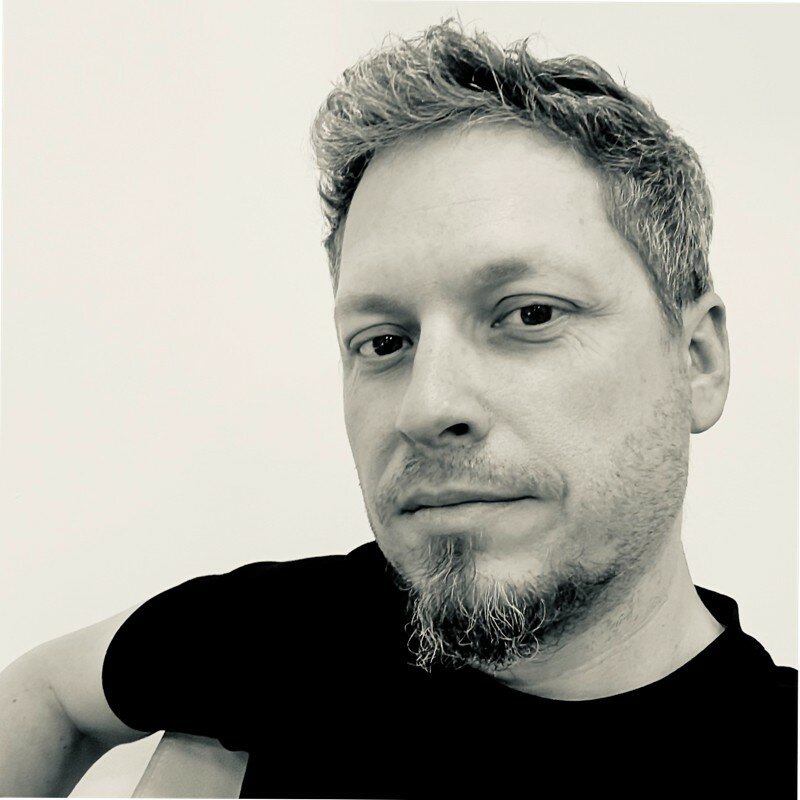 Bob Miller has spent more than 25 years in localnewsrooms, including 12 years as an executive editor with Rust Communications. Bob also produces an independent true crime investigative podcast called The Lawless Files.






Comments
No comments on this item Please log in to comment by clicking here