
There’s a lot to experience in the Catskill Mountains, part of New York’s Hudson Valley. You’ll find dense forests and steep mountains, waterfalls and hiking trails. It’s known as the birthplace of American landscape art.
You’ll find an active arts scene. A Shakespeare group. Writers and poets live there. There are bookstores. Many famous people, and some legends, either own homes or property in the region or hail from the Catskills, just a 90-minute drive from New York City.
In this section of the country, you’ll find communities, such as Hunter, Hurley, Olive, Saugerties, Shandaken, Windham and Woodstock. If you visit or live here, you’ll notice the vibrant colors and the music. You’ll feel a melding of nature, history and creativity.
But not too long ago what you wouldn’t have found in any of those communities was any semblance of reliable community journalism. No first draft of history. No storyteller of record. No watchdog. No Overlook. That was unacceptable — at least Jacqueline Kallachan thought so.
Kallachan has lived in Woodstock at least part-time since 2005. She’d come to love Woodstock, even before she really knew it as a full-time resident. She’d spent weekends there, and during those visits, the local newspaper helped her feel connected to the community. Over the years, the town had several publications come and go — many of them alternative publications focused on the arts.
By 2009, following a career as an epidemiologist in New York City, she moved to Woodstock full-time.
She learned a local bookstore was on the cusp of closing, and couldn’t stand to see it lost for good, so she and her husband bought the bookstore. It’s called The Golden Notebook. She reopened it in 2010.
She loves books. The written word. She modernized the store and turned it into a gathering space.
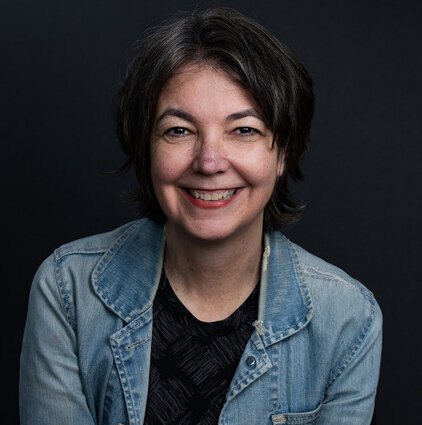
“I’m still a bookstore owner,” she said. “Owning your own business, and especially an indie bookstore, really kind of puts you deep into the community. We’re holding a space for people, not just the folks that live in Woodstock full-time, but people that come from all over the world.”
COVID came and went from the Catskills, and took with it a lot of journalists and local news. The Woodstock Times was discontinued. News coverage became regionalized and consolidates under one title, Hudson Valley One. Otherwise, the mountain region had largely become a news desert.
Kallachan knew there was room and need for another local news source.
“I originally imagined it being a physical paper. And by that time, in 2020-2021, I was working full-time in public health again. I knew Scott [Widmeyer], and we discovered we both sort of had this passion for trying to maybe create a local news site.”
Widmeyer came to the idea armed with a distinguished journalism and communications career. He’d previously founded Widmeyer Communications (now FINN Partners) and held chairs at multiple foundations and nonprofit boards. He’d previously reported on statehouse scandals and later played roles in major political campaigns.
So, the bookstore owner and the chief strategy officer of a communications agency put their heads together and methodically put pieces in place to build a non-profit journalism entity that covers six Catskills communities. They assembled an impressive board.
It took a bit of work — several focus groups and rounds of fundraising. Eventually, they had enough to get started, and they put out a search for their founding editor-in-chief. They found just the right guy in their own backyard, Noah Eckstein.
Eckstein is a descendant of German Jewish Holocaust refugees on one side of his family and Spanish Civil War refugees on the other. His grandparents encouraged storytelling and journalism. He volunteered as an intern at the age of 14 for the New York Post, which solidified his desire to become a journalist. He received his undergraduate degree in journalism and a Master’s degree in U.S. history from the University College in London. While attending school there, and for a short time after, he worked jobs at various newspapers.
He returned to the U.S., freelancing in the city. He’s written pieces for The New York Times, Vogue, Variety, The Guardian, Fast Company and other publications. Part of his background included research on misinformation and politics. He was initially hired on a part-time basis to help get The Overlook off the ground, before assuming the editor-in-chief role.
“We did community listening sessions, where we were going to each of our six towns … and just talked about what they wanted to see. We took all that data, and that really impacted how we started,” Eckstein said.
The core group targeted the towns that the founders believed could provide enough funding to sustain a nonprofit journalism effort. They assembled a second board, an advisory group of key community members who give regular input.

Since The Overlook’s launch, Eckstein has carried much of the content load, writing stories while also managing a team of freelance writers and photographers. He now works in the office where Bob Dylan wrote the song “Mr. Tambourine Man” and “Tarantula,” a collection of prose, poetry and lyrics.
“We saw the nonprofit as a viable model, not only in the Hudson Valley, but across the country. So, we wanted to have a way for readers to buy in, for them to donate however much they can, to feel like they can be a part of something that is more reflective of the spirit of the community — you know, giving out more information, more accurate information, but also doing things a bit differently, a bit more creatively, with a bit of spunk and pizzazz.”
The core focus is town government and public-service accountability reporting, but The Overlook, under Eckstein’s leadership, emphasizes boots-on-the-ground journalism with lots of human-interest stories, arts, music and high-quality photography. They’re steering away from police blotter news.
The Overlook has made visual journalism a priority, from the design of the website to the quality of the photography. The Overlook recently took home three photography awards from the New York Press Association contest, including one for overall photographic excellence. They also won a pair of awards for news coverage.
“We really pride ourselves in being visual first and having photographers in every point of the storytelling process,” Eckstein said.
Among the recent stories published by The Overlook was an article about a blighted apartment complex “that was being rented out to Woodstock residents on the fringe of society and in really difficult circumstances during COVID,” Eckstein said. “And that was like hundreds of FOIA requests. And our story with original photography exposed how certain landlords are taking advantage of post-COVID relief and money.”
“We are really distilling the most important news that residents need to know from those meetings,” he added. “One summer, the previous Woodstock town supervisor hired a Level 3 sex offender without the rest of the town board knowing. There was going to be a maintenance guy working around children at the summer camp. It was such a big story, and the town was showing up to protest.”
Along with all that dogged journalism for the Catskills, The Overlook plans community events to both raise funds and to welcome readers to connect. Events include barbecue gatherings/cocktail parties for a broader crowd, and more exclusive events like one planned at the Bearsville Theater.
So far things have been going well for the online publication. Eckstein is ecstatic that he will soon be able to hire two full-time journalists. The publication has gone from zero to 6,000 subscribers in a year and a half, with a goal of hitting 10,000 by the end of this year. Late last fall, The Overlook gained 100 new first-time donors, with another 75 who joined this spring.
“People are hungry for this,” he said. “And you know, in the amount of emails I get, the amount of letters to the editor and just handwritten notes of people supporting what we’re doing, you could see the need, and you could see why we’re growing. People want to be seen and heard and feel like they have a professional, high-quality local news outlet.”
The Overlook shows no signs of slowdown.
“We have been eyewitnesses in observing the hunger that residents in our communities have for local news and information,” said Widmeyer, the president and founder of The Overlook. “This gives me more hope for creating an upturn in civic engagement. When citizens are more informed, they make better decisions, they are more likely to vote, and they are more inclined to be engaged in community service. I am overwhelmed by the positive feedback that The Overlook is consistently getting from so many folks in the Catskills. These first 17 months have been amazing, but the best is yet to come.”
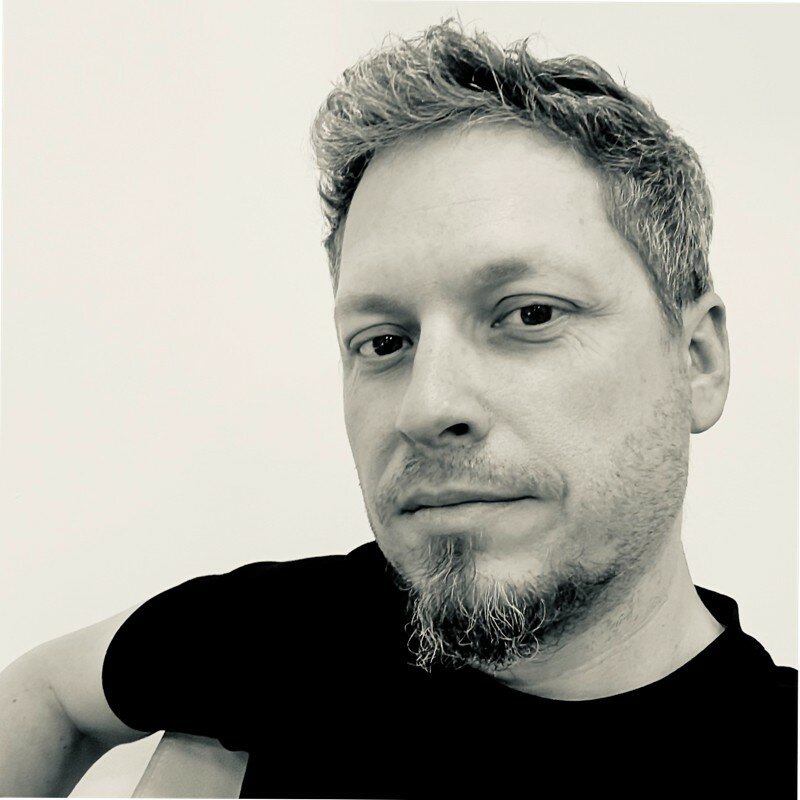 Bob Miller has spent more than 25 years in local newsrooms, including 12 years as an executive editor with Rust Communications. Bob also produces an independent true crime investigative podcast called The Lawless Files.


1 comment on this item Please log in to comment by clicking here



terrydagrosa
As a Hudson Valley resident and media business owner, I find The Overlook a welcome source of news for the area and very well done. Enjoyed reading this article and celebrating their success. Kudos to Jackie, Noah and the team for an elevated and much-needed local resource - and we're also huge fans of their branding agency!
Friday, June 26 Report this