
As journalists found themselves in tense and dangerous situations in recent weeks — when federal authorities confronted demonstrators protesting heightened immigration enforcement by ICE in Los Angeles and other communities — Nobel Peace Prize-winning Journalist Maria Ressa called on U.S. journalists and newsrooms to stand together to shore up our rights.
“This feels like both déjà vu and PTSD,” Ressa, the founder of Rappler, said in an interview. “It’s the same playbook. Corporate media quickly tried to find a compromise in the Philippines under Duterte. The largest broadcaster lost its license, and even after the end of six years of Duterte, it never got it back. So, I worry.”

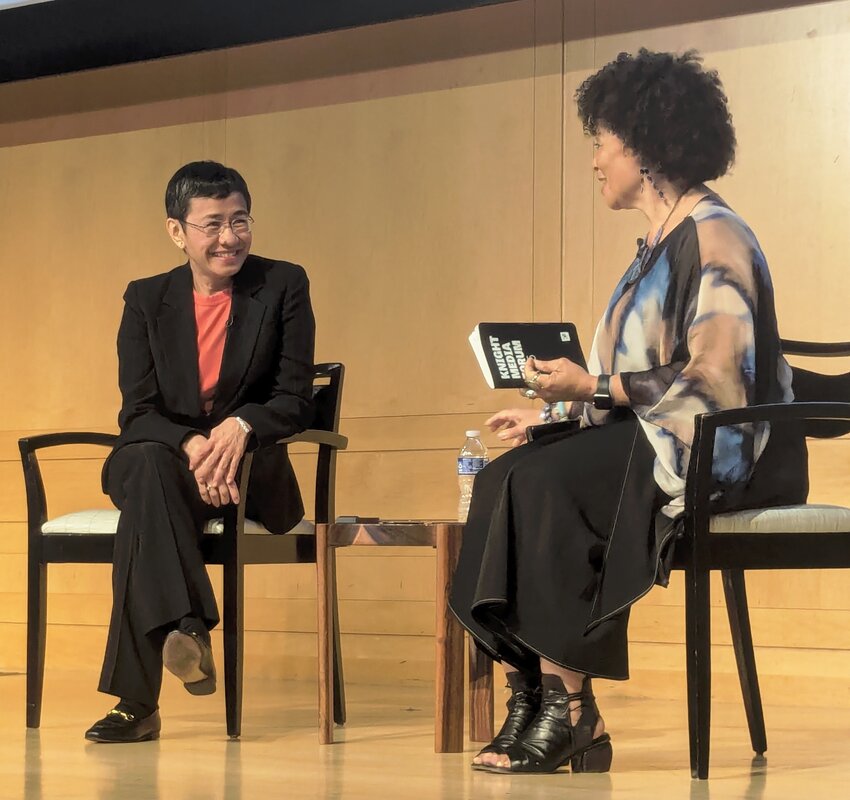
Editor & Publisher interviewed Ressa during the June Media Impact Funders conference at the National Constitution Center in Philadelphia. “You must take action to uphold a free press,” she said. “Otherwise, the slide to authoritarian control will come much faster than anyone thinks.”
Ressa’s message comes as U.S. press freedom faces unprecedented legal and political threats. Since returning to office, President Donald Trump and his administration have mounted aggressive attacks on major news organizations and public broadcasters.
“We’re seeing what I would call a coordinated chaos campaign by Trump to undermine the rule of law and to target the basic, universal understanding of what the First Amendment means,” said Nora Benavidez, senior counsel and director of digital justice and civil rights at Free Press. “In 2017, Trump referred to the media as the enemy of the people. How quaint that era feels now.”
ABC News was one of the first media targets after Trump’s 2024 election victory. In December, the network and its parent company, The Walt Disney Company, settled a defamation lawsuit filed by Trump, agreeing to pay legal fees and $15 million to Trump’s presidential library. According to The Washington Post, Disney executives wanted to avoid a prolonged legal battle and smooth relations with the incoming administration.
CBS’ parent company, Paramount Global — with a pending deal needing federal approval — is reportedly in private negotiations to settle a lawsuit brought by Trump over a “60 Minutes” interview with Vice President Kamala Harris that he claims was edited to favor her. The decision to pursue settlement talks prompted the resignation of “60 Minutes” Executive Producer Bill Owens and CBS News President Wendy McMahon, who opposed what they saw as a capitulation to political interference.

Just after the ABC settlement, Trump said at a public event that he would personally continue to pursue legal action against news organizations he believes harmed him — and that government authorities should do so, as well.
Since taking office, the Federal Communications Commission, headed by Brendan Carr, has reinstated previously dismissed investigations into Trump's presidential campaign coverage and has even threatened license revocations.
Ressa said these types of investigations mirror what happened in the Philippines under Duterte: “First it was the largest TV broadcaster, then the largest paper, and then it was Rappler. We were the largest digital outlet. In 2018, we got our first shutdown order; in 2019, I had 10 arrest warrants. I always say, 2019 is the year I kept getting arrested.”
Journalists and newsrooms taking action
One of the Trump administration’s earliest actions against the press was an executive order to shutter Voice of America (VOA), the U.S. government-funded broadcaster founded after World War II. According to Reuters, VOA had a 2024 budget of $886 million and reached 427 million people weekly in over 63 languages.
The order led to mass layoffs of VOA’s 1,300 employees. In June, after Israel bombed Iran, the administration tried to bring back members of the organization that broadcast in Iran. “I don’t know why they chose to keep some of the journalists on, but they are really challenged to do their work,” said Patsy Widakuswara, VOA’s White House Bureau chief. “The whole network that helped get their reporting out has been shut down.”
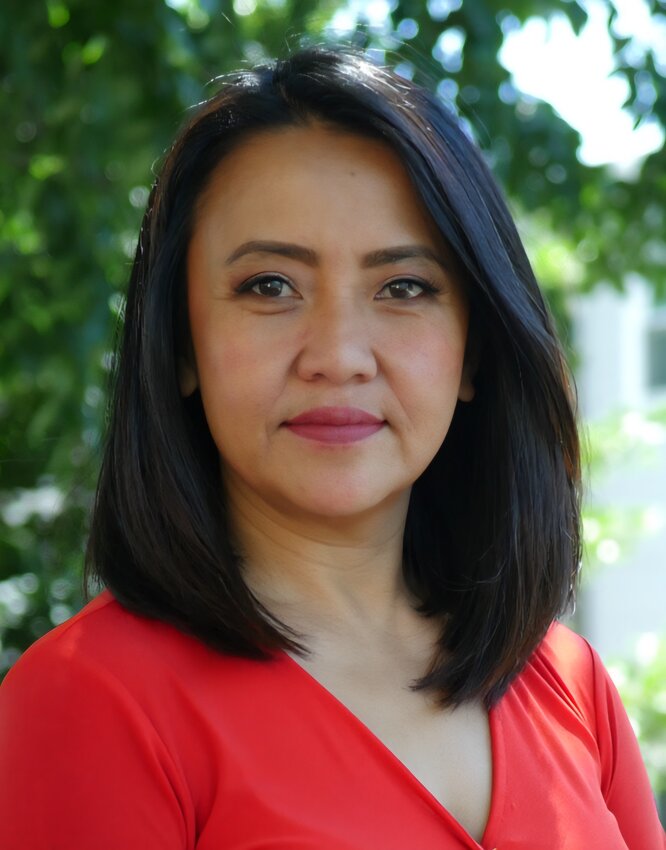
Widakuswara is the lead plaintiff in one of several lawsuits filed against the administration challenging the shutdown. She grew up in Indonesia and was a student journalist during the dictatorship there. "Freedom is in our [VOA’s] charter. We produce independent news in places where that may not be easy to get,” she said. “For me personally, it is my moral code. I lived where I didn’t have a free press for the first 24 years of my life. I want Americans to know what we have is very fragile.”
Another newsroom in the administration’s crosshairs is The Associated Press. Both Maria Ressa and Nora Benavidez pointed to the AP’s federal lawsuit filed in February as a vital stand for First Amendment rights. The lawsuit alleges unlawful retaliation after AP reporters were barred from White House press events, following the outlet’s refusal to refer to the Gulf of Mexico as the “Gulf of America.”
“These kinds of exclusions of traditional media outlets are a sign of the times,” said Benavidez. “They are this broader effort to limit press access while elevating fringe bloggers, podcasters, you name it, who will just parrot Trump’s narrative.”
Ressa said these developments reflect the first stage of democratic erosion: media capture.

“There are four stages,” she said. “Media capture is number one — attacks from the bottom through disinformation, and from the top with legal and regulatory pressure. Then comes academic capture, NGO capture, and finally, state capture.”
Benavidez added that efforts to defund NPR, PBS and the Corporation for Public Broadcasting are part of this strategy. “Public media is one of the last free and essential ways people can access information,” she said. “Defunding them is a fundamental attack on the public’s ability to access free and accurate information.”
Each public media outlet and a handful of local outlets have filed lawsuits to try to forestall the administration's efforts.
Press harassment and intimidation
Journalists covering the Los Angeles immigration protests faced an unprecedented show of force, with the Los Angeles Police Department (LAPD) and sheriff’s deputies joined by National Guard and Marines — deployed by Trump despite opposition from Mayor Karen Bass and Governor Gavin Newsom.
More than 80 press injuries and detentions have been documented by the Los Angeles Press Club, which has filed a lawsuit against the LAPD for violating journalists’ First Amendment rights. “Journalists covering the protests have been shot with ‘less-lethal munitions,’ charged by horses, and forcibly prevented from filming,” the group said.
Sergio Olmos, a reporter for CalMatters, said that after covering more than 100 protests, he had never seen as many less-lethal rounds fired in a single day as during the June 8 demonstrations.
The First Amendment Coalition and the Reporters Committee for Freedom of the Press also sent formal letters to the LAPD, the mayor and the governor, condemning the targeting of journalists and demanding compliance with laws protecting press freedom. The letters were co-signed by leading national press freedom organizations, advocacy groups and unions.
The most vulnerable and resources to help
Benavidez and others pointed out that while larger media outlets the administration targets make headlines, freelance, community-based and student journalists are especially at risk.
“We’re seeing a new level of risk,” said Benavidez. “The administration is redefining free speech and protest that runs counter to their policy as criminal behavior.”
That vulnerability extends to student and immigrant reporters.

“I’ve been doing this full-time since 1991. I’ve never seen anything like this,” said Mike Hiestand, senior legal counsel at the Student Press Law Center (SPLC). “The volume, the fear, the types of calls we’ve gotten — it’s something entirely new.”
Hiestand said calls began spiking after Trump ordered ICE enforcement at schools. “High school journalists were asking how to report on undocumented classmates. They wanted to do it safely. So, we walked them through how to protect sources and use Signal — skills professional reporters use when covering national security.”
Later, as student protests erupted over Gaza, the SPLC fielded calls from college journalists concerned about their safety and whether their coverage could lead to disciplinary action — or worse. Then came a breaking point: the arrest of Tufts Student Journalist Rumeysa Öztürk after she co-wrote with three other students an op-ed critical of their university’s lack of action on Gaza.
It was the kind of op-ed Hiestand said had always been viewed as protected speech. “We didn't believe it at first,” Hiestand said. “When Secretary Rubio claimed she was being held for ‘terroristic speech’ and the court documents revealed the op-ed was the only thing cited — it was chilling.”
He said their organization has had multiple calls from international students worried about their safety based on the topics they’ve reported on. “I had a student who was supposed to come to the U.S. for a journalism conference ask if it was safe for him to come because he’d written about Gaza. I couldn’t really answer that. I had to tell him it was possible he could get detained.”
SPLC has a resource center with guidelines and tips and a hotline for students to call for help. Hiestand said they have about 250 volunteer attorneys who help student journalists navigate issues with school administrators and authorities. However, they are also seeking First Amendment lawyers with immigration expertise.

Community-based journalists, many of them immigrants or asylum seekers, are facing similarly existential threats. Kavitha Rajagopalan, director of the Asian Media Initiative at the Craig Newmark Graduate School of Journalism’s Center for Community Media, works with a safety cohort of 14 newsrooms serving Asian diasporic communities — including Afghan, Bangladeshi, Indonesian and Hong Kong populations.
“These journalists are on the front lines,” Rajagopalan said. “Some have asylum, some are here on visas, some are U.S. citizens. Many are documenting disinformation. Others are reporting on human rights abuses from exile. If they’re deported, they go straight to jail.”
What once counted as sound legal advice is no longer enough in an age of sophisticated cross-border misinformation campaigns. “It’s like collective gaslighting,” Rajagopalan said. “Even when these journalists do everything right, they’re still vulnerable. We’ve had to pair newsrooms with immigration attorneys, First Amendment lawyers and CPJ and Reporters Committee staff just to begin risk assessments.”
“Their visa status now feels like a weapon that can be used against them,” she added.
In mid-June, independent Spanish-language Reporter Mario Guevara was arrested by local police in Atlanta while covering immigration actions for MG News. Guevara, who had fled intimidation in El Salvador, wore a press vest and was with a group of reporters. According to his attorneys, Guevara was the only one arrested. Though his immigration status allows him to work and he has a pending green card application, ICE placed a hold on his detention.
Press freedom organizations have been chronicling attacks and trying to amplify available support. A helpline for journalists, launched by PEN America during the 2024 election, wrapped up in April after helping about 220 journalists. It had provided referrals to service providers, but its funding ran out.
Viktorya Vilk, director of digital safety and free expression at PEN America, said there is an effort to revive the program. “We, alongside multiple Helpline partners, are actively looking for funding and other opportunities to continue cross-organizational coordination to provide holistic safety support to journalists and newsrooms in the U.S.”
The Committee to Protect Journalists announced a Journalism Assistance Network — a collaboration among PEN America, the Reporters Committee for Freedom of the Press, the International Women’s Media Foundation and the Freedom of the Press Foundation — to help journalists access legal, safety and mental health resources more easily.
Ressa agreed, urging American journalists to connect more deeply with each other and local communities to build resilience.
“You need to get out of the virtual world — which is pumping you full of toxic sludge — and decide what civic engagement looks like in the age of exponential lies,” she said. “Americans will have to defend the freedom they’ve built or risk losing it.”
Benavidez echoed the urgency. “We can’t wait for hope. We need action,” she said. “Our civil rights expanded for centuries. But now our rights are contracting. The future of media freedom is at stake — and it’s up to us to fight for it.”
 Diane Sylvester is an award-winning 30-year multimedia news veteran. She works as a reporter, editor, and newsroom strategist. She can be reached at diane.povcreative@gmail.com.





Comments
No comments on this item Please log in to comment by clicking here