
Much like all technological innovations, generative AI is neither good nor bad: it’s a tool with potential, but only if one knows how to use it effectively and achieves positive results. Several studies have revealed the potential and the promise of generative AI, but it’s starting to bump against reality.
The news and media industries are also wrestling with the impact of AI. Many are cautious because generative AI’s capabilities strike at the heart of what it means to be a publisher, editor, journalist, visual storyteller and anyone creating print, audio and video content.
Others in news and media, however, are leaning into AI and quickly discovering how to use the tools to evolve their information gathering and content distribution process and to drive substantial revenues.
The Jersey Bee is buzzing with AI
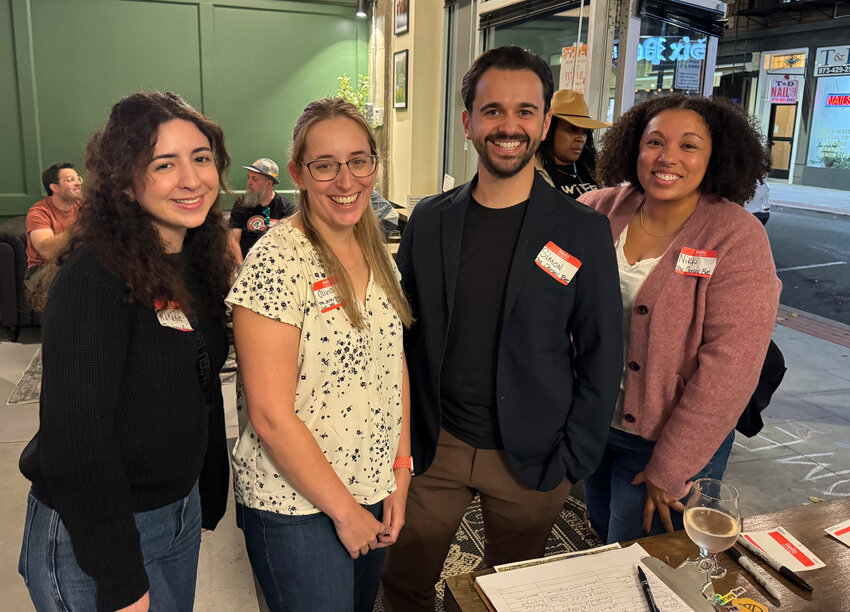
As much of the research has revealed, introducing AI in the newsroom works best when focusing on a specific need. For Simon Galperin, founder and executive editor of The Jersey Bee, there were two needs he recognized: first, providing targeted information for underserved communities, and second, presenting the most critical pandemic health bulletins in 2020.
Galperin was a John S. Knight Journalism Fellow attending Stanford University classes remotely from New Jersey because of the pandemic. That allowed him to develop what would become The Jersey Bee through the Bloomfield Information Project. Bloomfield is a town in Essex County, which includes Newark and various communities to its west and northeast.
“The pandemic was the perfect testing ground for curating and filtering the public health information people needed. There was too much of it to navigate, and literally none was being delivered to the Bloomfield ZIP code. We expanded from the project in 2023, creating The Jersey Bee that now covers 12 municipalities using that same listening methodology and some of those same technologies — at a larger scale,” Galperin said.
Listening to community residents is the starting point for The Jersey Bee’s public service journalism. Daily newsletters are sent to the 12 communities, Monday through Thursday, plus a weekly county-wide newsletter and the New Jersey Weekly newsletter for the entire state. Residents also receive text messages and social media content. The newsletters currently serve more than 3,000 people and are highly rated.
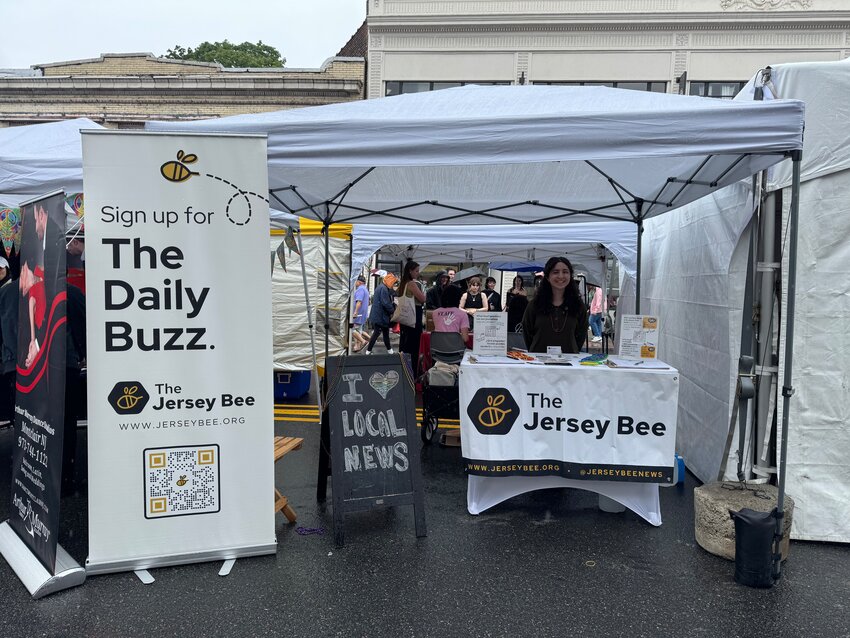
The Jersey Bee’s reporting model relies on Harvest, an AI-automated tool, “that uses community listening and ecosystem mapping,” according to Galperin. He developed Harvest based on his background in technology and engagement journalism.
“We take what we hear and the assets we find and plug them into the system to create seeds of questions people want answered and sources of information. Our editorial team uses Harvest to curate that information at a scale that other organizations previously couldn’t. When we see information from a local government, it becomes an event on our calendar, a post on our website blog, a social media post and is published in the newsletter. We don’t need a person writing 12 or 13 newsletters every day,” said Galperin.
Creating those 12 to 13 newsletters only requires the time of one and a half staff members. Galperin emphasized that the curation process is human-driven through various stages. Someone reviews the content and determines if it is useful. Then, another person decides that the information is good. A generative-AI assistant writes the first draft, and an editor reviews the final draft.
Improving coverage of Michigan public meetings with AI

Sometimes, practical ideas don’t require multi-billion-dollar AI companies. There are smart people at the local level who lack extensive tech experience, but can recognize a problem and create a solution. Dustin Dwyer is a bureau reporter with Michigan Public, the state’s public radio network. In covering the west side of the state, and its many townships and small towns, he couldn’t spend hours at all their city council, school boards and other public meetings.
“When many of these small towns started posting videos of their meetings on the internet, I had the idea that we could extract the audio tracks and have them transcribed, which could reside in a database. We applied for and received funding from a Google News Initiative Challenge,” Dwyer said.

Brad Gowland, a programmer at Michigan Public, was Dwyer’s partner in hatching this idea. Gowland did all the programming for what would become Minutes. It quickly proved its usefulness at Michigan Public, and Dwyer realized it was a tool that could work in any newsroom. Through the Minutes website, Michigan Public, as well as other newsrooms, can search the database of thousands of transcripts from more than 100 city, county and school board meetings. Reporters search by topic and sign up for email alerts for when those topics appear in recent meetings.
With the end of the Google News Initiative funding, Dwyer had a conversation with someone at the Knight Foundation, leading Dwyer to The Associated Press. Since 2023, The Associated Press (AP) has taken a leading role in helping small newsrooms integrate AI into the reporting and publishing process. It selected Minutes as one of five AI projects in 2023 as part of the AP’s Local News AI Initiative, which the John S. and James L. Knight Foundation funded.
“The AP connected us with the Northwestern University Knight Lab. It helped us update our code so it would run more efficiently and suggested backend improvements. It showed us how to save on computing power, and then switched our transcription service, which both saved money and increased quality. We wouldn’t be alive now without partnering with the AP, and I’ve been able to return to my reporting duties,” Dwyer said.
The AP is currently testing Minutes in other newsrooms to determine how to incorporate it into a newsroom’s workflow. Dwyer emphasized that Minutes doesn’t replace the value of attending public meetings, but reporters can search past transcripts to find an item they missed or has become important.
For more information, complete the form on the Minutes website.
Guiding smaller newsrooms through the AI labyrinth

While larger newsrooms and media companies have the financial and human resources to adopt and manage AI tools, small- to medium-sized news and media outlets face not only these barriers, but also many others that hinder their ability to benefit from AI. Recognizing this need and offering a solution is how Hacks/Hackers has been creating a common ground for journalists and technologists to share ideas and innovations since 2009.
Don’t be put off by the name. Burt Herman, co-founder and principal, said that in “Silicon Valley speak,” a hacker is someone who can solve problems, and “hack” is a self-effacing term for journalists.
Hacks/Hackers has hosted hundreds of local meetings and hackathons, which are multi-day events with local journalists, technologists and community members. They come together to build prototypes of products that they then present to the other attendees and may become working products. Through these events and other programs, Hacks/Hackers now has a global network of thousands of journalists, academics and others, as well as collaborations with major institutions and support from an impressive list of funders and sponsors.
The nonprofit organization’s latest initiative is the Hacks/Hackers Newsroom AI Lab, which launched in the summer of 2025, with a $300,000 grant from the Patrick J. McGovern Foundation.
“We wanted to help smaller newsrooms supercharge what they’re doing, to give their people the ability to concentrate on the deeper work and to find information they might otherwise not have found with AI technology,” Herman said.
Herman and his team wasted no time, welcoming Wisconsin Watch and The Connecticut Mirror as the first Newsroom AI Lab partners in August 2025. The foundation grant will support the program for a year, through mid-2026, and will involve a total of 10 partners — and there is already a waiting list.
The lab is a very hands-on program. During an intense three-month curriculum, the company’s technical advisers, Jake Kara and Paige Moody, will guide partner newsrooms through the AI labyrinth. News operations will learn how to match the right AI tool with their specific needs. Reporters will acquire AI skills, and Kara and Moody will remain involved to address any technical issues.
“We chose Wisconsin Watch and The Connecticut Mirror because they’re statewide news operations. We encourage them to discuss and share solutions that are relevant and applicable to both. I’m also excited about how our AI Newsroom Lab could help a one-person newsroom do great reporting and also be sustainable,” Herman said.
Interested newsrooms can complete this form.
AI helps 6AM City to brighten more mornings

Innovation, operational efficiency and smart business acquisitions have driven the success of 6AM City, founded by Ryan Heafy and Ryan Johnston in 2016. 6AM City’s network of newsletters and its coverage of local lifestyle, civic news and events greet thousands of readers every morning. Being astute entrepreneurs, Heafy and Johnston made a large leap in their expansion with the acquisition of Good Daily’s 350+ local newsletters in the summer of 2025.
Matthew Henderson not only founded Good Daily, but he also was a one-person operation that quickly expanded to those 350+ markets in less than a year. With 6AM City’s purchase, Henderson was named the company’s vice president of engineering.
“Matthew was so successful so quickly that it became a burden to field all the micro sales conversations and opportunities, customer service and all the other minutiae of operating a media entity. That’s not where a developer typically thrives. Matthew saw a clear synergy, and we have a robust sales team. We understand the content and the product we've built, and we know how to optimize it for success,” Heafy said.
Now, 6AM City has newsletters in more than 400 cities, reaching approximately two million daily readers and 38% of advertisers in multiple markets. Heafy said AI enhances the company’s super-streamlined, efficient business processes, making operations even more automated and faster.
“We used to have two editors and a managing editor per city, but today we have one editor per city. We’ve internally rebranded the Good Daily markets as seed markets with AI-produced newsletters, supported by self-serve ad revenue, national ad revenue, affiliate marketing and other revenue streams. We’ve also deployed additional audience development tools and tactics to grow those markets at an exponential rate,” Heafy said.
Once a seed market reaches a certain revenue number and subscriber and advertiser interest levels, 6AM City hires an editor and applies sales resources. This allows the revenues to grow from less than $100,000 per year to potentially more than $1 million. Heafy sees a clear path to be in 2,000 U.S. markets.
“We don’t use AI to write our content, and that’s not how it should be used, especially for news outlets. We lean on it as AI-assisted created content. We try not to use other media sources because they’re inherently biased. We are now able to go to source content leveraging AI and technology from true data and parse that information in a manner that consumers want and is optimized for the future of content consumption. SEO optimization and search are not the primary ways people discover content. They want it packaged the way that we deliver it in newsletters,” Heafy added.
Many news and media outlets continue to grapple with the generative AI revolution. As the technology matures, the challenge will only be greater. There are paths forward, but avoiding generative AI or hesitating in its adoption are more likely to cause those paths to disappear.
 Bob Sillick has held many senior positions and served a myriad of clients during his 47 years in marketing and advertising. He has been a freelance/contract content researcher, writer, editor and manager since 2010. He can be reached at bobsillick@gmail.com.


1 comment on this item Please log in to comment by clicking here






jimdela
Ryan Heafy says “We don’t use AI to write our content … We lean on it as AI-assisted created content.” I wonder where he draws that line. 20% AI? 80%? I’m finding in my own newsroom, that it takes longer to untangle the soulless world salad that AI creates — and correct factual errors it inserts — than it does just to do it myself.
Tuesday, October 14, 2025 Report this