
“We’re all in this together.” It’s a phrase that came up a lot at the Online News Association’s (ONA) annual conference — #ONA26, held in Chicago from March 29 to April 1. And it’s a shared sentiment that resonates throughout the news media community today: We face formidable challenges, but together, we will solve them.
The phrase is also apt to describe the spirit of ONA26 and the association itself. Community, camaraderie, collaboration and mentorship seem more important — more cherished — than ever. ONA provides literal and figurative space to network, nurture relationships, collaborate and collectively innovate.
Niketa Patel is ONA’s executive director and CEO. She’s been an ONA member for 22 years and served on the board of directors for six years. She assumed the chief executive role in March 2025.
“My first year has been amazing. I am in awe of the community every single day. When we can inspire people, when they find our programs and offerings and the community itself helpful, it resonates with me,” Patel said. “That brings me joy.”
Diversity is what makes ONA unique, Patel suggested — members span age ranges and generations; they are ethnically diverse; they’re at different stages in their careers, work in different roles and across platforms, nonprofits, independent media, public media and legacy media.

With this broad and diverse membership in mind, ONA delivers virtual learning, professional development and networking events. It administers the AI in Journalism Initiative, the Women’s Leadership Accelerator program, a Digital Women Leaders mentorship program, an HBCU Digital Media Fellowship, and the MJ Bear Fellowship for journalists under 30, named in honor of an ONA founding member.
“The 11th cohort of the Women’s Leadership Accelerator just graduated, and we’re planning the 12th,” she said.
In 2025 alone, the association hosted 36 virtual events, according to Patel’s count. The association administers a Slack channel for members and publishes a newsletter, “ONA Weekly.”

Patel recounted her professional path, which began in college with a single choice: to study print media or broadcast media. Today, she marveled, there are so many more opportunities in news media.
As she navigated her early career, Patel recalled how important professional development became. Change came at a relentless pace — then, as now — and she had to invest in skills development to advance. She would go on to work in audience and product development for CNN, ABC News, CBS News, The Atlanta Journal-Constitution and The Florida Times-Union. She later became the senior director of partnerships and platforms at The 19th, and prior to accepting ONA’s chief executive title, she was the senior director of leadership programs at CUNY’s Craig Newmark Graduate School of Journalism.

In addition to ONA’s professional development offerings, it also hosts the Online Journalism Awards, which honor “excellence in digital journalism around the world.” Entrants are adjudicated in the spring, with an awards ceremony scheduled for October 2026. Last year’s winners were an impressive class that included The Washington Post, CalMatters, The Wall Street Journal, Blue Ridge Public Radio, Zeteo and others representing a spectrum of news outlets, from legacy media to niche publishers and nonprofit startups.
ONA’s ambitious mission wouldn’t be possible without the association’s team, which Patel called “small but mighty:” Deputy Director Hanaa Rifaey, Head of Programs Meghan Murphy, Program Manager Brian Duff, Community Impact Facilitator Erin McGregor and Strategic Partnerships Coordinator Bill Brady.
“They are just incredible — their passion, their dedication and the ways in which they support and show up for each other,” she said.
“I feel the same way about our board of directors,” she added.
A celebration of diversity, innovation and community
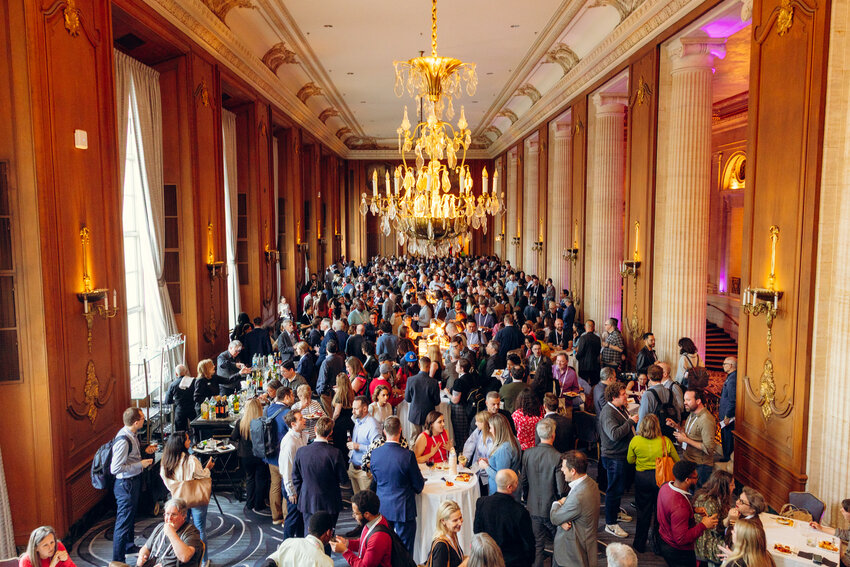
At ONA26 in Chicago, there was a sense of optimism and energy that filled the conference rooms. In the hotel’s public spaces, attendees spotted familiar faces and names on lanyards, running toward one another for embraces. “We call that the ONA squeal,” Patel said. “Every year at the annual conference, we also have 400+ new attendees. That’s incredible to me, that new people are discovering the organization, realizing the impact and the value of ONA membership.”
Thanks to the generosity of sponsors like Press Forward Chicago, the Field Foundation, the Joyce Foundation and the Driehaus Foundation, over 150 attendees received scholarships to attend ONA26.
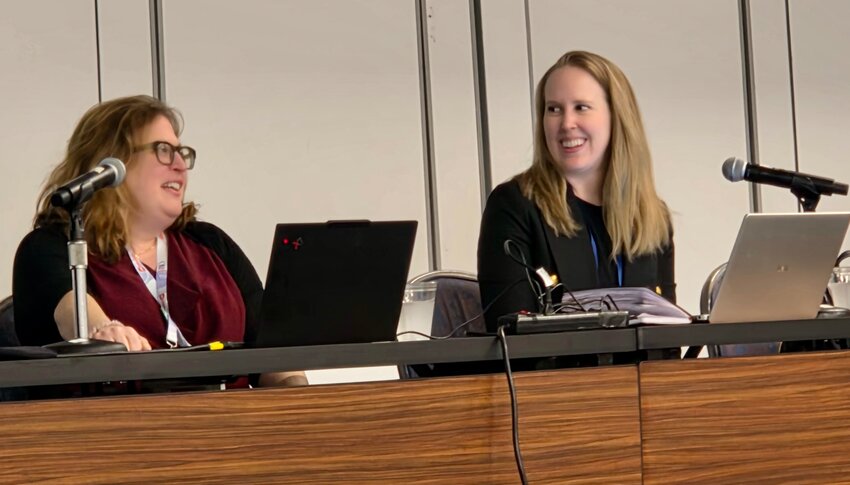
The conference comprised sessions on AI and data journalism, the content creator economy, audience engagement, adaptive leadership, social video, funding for sustainability and special projects, technology and product, legal risks and copyright law, and reporting from autocratic societies around the world.
The conference team is mindful of creating a faculty that is as diverse as ONA’s membership, Patel explained. They want each session to move beyond theory and give the audience practical, actionable ideas.
There were four featured sessions held in the Chicago Hilton’s dramatic, grand ballroom — the first, focused on reimagining the public media model; the second, about polarization, bias and earning the public’s trust. On the final day, Chicago’s Mayor Brandon Johnson joined WBEZ's Sasha-Ann Simons for a conversation about the media landscape. Simons remained on stage to moderate the next featured presentation, “Defending the First Amendment: The Future of Press Freedom,” with panelists Karen Attiah, Versha Sharma, Gunita Singh and Nick Valencia.

Sessions about content creation were popular among attendees who wanted to develop their own social video skills or collaborate with content creators.
The AI sessions were multifaceted by design, Patel explained. AI was a hot topic. ONA’s CEO said that she hopes, as a community, we’ve moved past the fearful phase of AI adoption and begun a new phase of smart and ethical experimentation: “How can we use AI in thoughtful ways? Not how can we replace journalists, but how can we use AI tools to enhance their work? How can AI be a companion to us, whether you’re an editor, reporter, a product manager or an executive?”
ONA26 vibes

Jennifer Kho is a busy consultant these days. After leadership roles at HuffPost, the Chicago Sun-Times and Chicago Public Media, Kho launched her own consultancy. She was a member of the faculty at ONA26 — her ninth ONA conference. Alongside Angela Pacienza, executive editor at The Globe and Mail, Kho hosted a packed session called “Bringing Readers Back: Real-World Tactics for Combating News Fatigue.” The last 10 minutes were dedicated to a Q&A session with the audience, and people lined up at a floor microphone to ask questions. That was heartening to Kho, who reflected on her speaking experience and said it felt less like being on stage and more like having a conversation with the people in the room — people grappling with the same challenges, yet experimenting in different ways.
Kho described ONA as one of the most “hopeful” news media events she attends each year. “We’re all facing a lot of challenges in the industry. It helps to know we’re facing them together — and not just to commiserate, but to brainstorm and share. I always feel inspired, because I’ve been able to connect with others who are working to move our industry forward,” she said.
“[ONA] is a great place to test out some of your theories or thoughts about the industry and what’s going on in other newsrooms,” said Kho.

Marco Cummings is a digital strategist for the Denver Post and a board member for the Society of Professional Journalists’ Colorado chapter. He traveled to Chicago for his first ONA conference, where he connected with some former colleagues and new friends. He hoped to gain ideas for streamlining workflow and newsletter production, freeing up time for social video projects.
Cummings said one of his favorite ONA26 sessions featured Dave Jorgenson, owner of Local News International and formerly known as “the Washington Post TikTok guy.” Cummings also attended some AI sessions. He was an early adopter, but he expressed his concern about the “fast and loose” ways AI is being used, such as using generative AI to create images or rewriting press releases without offering context, fact-checking or de-spinning the information. Stock art is a better alternative to AI-generated art, he suggested — not only are you assured that photographers and illustrators are being compensated for their work through licensing, but you also eliminate the risk of a copyright-infringement suit.

Cummings and his colleagues also enjoyed some networking events — a happy hour hosted by the Chicago Headline Club, and a reception hosted by WBEZ, complete with a tour of its newsroom and production studios. And after the conference wrapped, they seized the opportunity to take in a game at the iconic Wrigley Field.
Independent Journalist Tasmiha Khan attended ONA26 as a first-timer, thanks to a scholarship from The Joyce Foundation. She reflected on sessions that resonated with her — panels on sustainability and funding through capacity-building and capital grants or endowments. She also learned how philanthropic organizations may be more inclined to fund collaborative projects.
Khan was also invigorated by sessions about content creators.

“The creator economy of journalism was one of my favorite sessions. It really showed that, given the instability the media is facing right now, relying on your own skills and network to chart a path makes sense in the moment. I met with some independent journalists who felt like me — that, even if you produce a good story, it’s not always easy to find a home for it, and sometimes you need to carve out your own niche to do that,” Khan said.
She took advantage of meet-and-greets with other journalists based in Chicago and throughout the Midwest. She also appreciated the opportunity to connect with people from other parts of the country and the world — some she’d only known virtually before the conference. And she made lots of new connections, too.
“ONA is the place to be when it comes to media,” she concluded.
 Gretchen A. Peck is E&P’s editor-in-chief. She welcomes your emails at editor@editorandpublisher.com.






Comments
No comments on this item Please log in to comment by clicking here