
What if a map could reveal more than streets and cities — what if it could expose redlining, track broken promises on racial justice, and chart the health crises hitting Black communities hardest? That’s the work of Mapping Black California, a decade-old project led by Paulette Brown-Hinds, Candice Mays and Alex Reed. Using cutting-edge data visualization, the Inland Empire-based team transforms complex data into accessible, powerful narratives of accountability. Their mission is bold: to make visible what has too often been hidden — and in doing so, to help reshape California’s future.

As legal threats, political attacks and corporate pullbacks mount, the future of newsroom diversity, equity and inclusion is on shaky ground. From shuttered DEI offices to Supreme Court decisions with industry-wide implications, many media leaders now find themselves asking how — or if — DEI can survive. In this in-depth report, advocates, journalists, executives and legal experts weigh in on where things stand and what’s at stake. The message is clear: retreating isn’t just risky — it’s a step backward for journalism’s credibility, sustainability and connection to the communities it serves.

Dallas Voice has been persistent and undeterred in its mission since 1984 to speak loudly and proudly for the Dallas LGBTQ community. Dallas Voice tells the community's many stories and advocates for the advances in equality, legal rights and basic human respect the community enjoys today.

The Michigan Chronicle blends journalism, events and marketing to build deep connections with the Black community. Through initiatives like Women of Excellence, Publisher Hiram Jackson fosters lasting engagement, while strategic storytelling highlights success and empowerment. This innovative approach strengthens trust, expands reach and redefines journalism’s role in community impact.

Prism, an award-winning independent nonprofit newsroom led by journalists of color, takes a transformative approach to reporting. Its mission is to “tell stories from the ground up: to disrupt harmful narratives and to inform movements for justice.” The team of 15 staffers and freelancers based all around the country realize this vision through movement journalism.
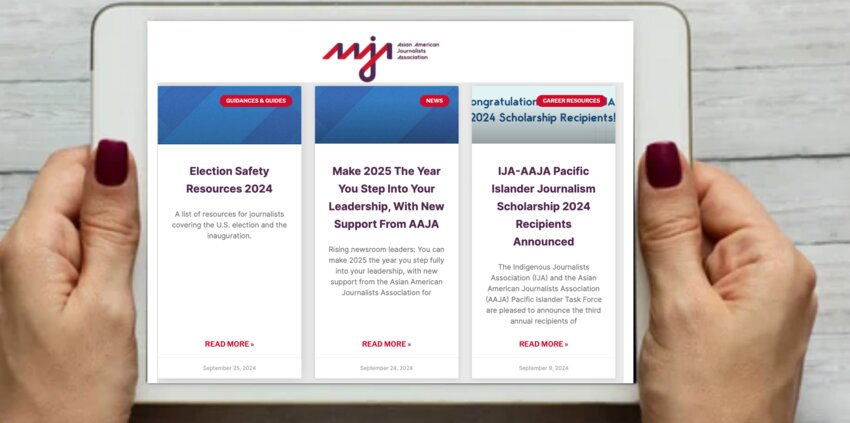
For more than four decades, the Asian American Journalists Association (AAJA) has been a driving force for diversity, representation, and integrity in American journalism. Under the leadership of Nicole Dungca, an investigative reporter at The Washington Post and AAJA Board President, the organization continues to empower Asian American and Pacific Islander (AAPI) journalists through advocacy, training, and leadership programs.

The nation of Haiti is more than its headlines, and to know Haiti is to know its people. The Haitian Times knows its people. Thrust into the spotlight by presidential and vice-presidential candidates Donald Trump and J.D. Vance over debunked claims about eating pets, Haitians living in America are under intense pressure. They’re leaning on The Haitian Times perhaps more than ever before.

One of Jin Ding's first actions as CEO of Initium was moving its headquarters from Hong Kong — where it had been since it was founded nine years ago — to Singapore. Despite the move, Initium still reports on Hong Kong and mainland China with a network of trusted freelancers. This Chinese-language digital news site also is seeking to expand its reach and serve the growing number of Millennial and GenZ Chinese who have made their way to the U.S. over the past decade.

An ambitious research project by The Pivot Fund is focused on the Great Lake states. The project aims to better understand the news landscape in the region and help identify news and information sources that have specifically earned the trust of communities of color. Pivot began its Midwest survey in Minnesota in early 2024, and it should be completed this month. The project also includes news ecosystem studies in Michigan, Wisconsin and Illinois.