|
As search traffic disappears and Gen Z increasingly gets its news from social media, YouTube and AI, news media publishers are confronting a question that could determine their future: How do you build loyalty with an audience that rarely visits your website? In this thought-provoking “Voices” column, E&P columnist Rob Tornoe explores why younger readers are abandoning traditional news habits — and offers some practical strategies for reaching the next generation before it’s too late.
more
Rob Tornoe | for E&P Magazine
|
8/6/26
|

|
What happens when Google stops sending readers to news websites? In his “News Media Today” column this month, E&P’s Rob Tornoe explores “Google Zero,” the devastating impact of AI search on publishers large and small, and why many news organizations now believe they must prepare for a future where Google delivers answers — but not audiences.
more
Rob Tornoe | for E&P Magazine
|
7/30/26
|

|
Can a newspaper survive — and even thrive — without a paywall? In this month’s digital media column, E&P columnist Rob Tornoe examines the bold decision by The Salt Lake Tribune to make all of its journalism free after more than 150 years as a subscription-based publication. The move offers a fascinating case study in nonprofit sustainability, audience growth and whether membership, philanthropy and community support can replace traditional digital subscription revenue.
more
Rob Tornoe | for E&P Magazine
|
6/19/26
|

|
As newsroom editorial cartooning jobs continue to disappear across the country, many cartoonists are finding new life — and new audiences — through digital platforms like Substack. In this commentary, E&P’s Rob Tornoe explores the remarkable comeback of Pulitzer Prize-winning cartoonist Steve Sack and what his resurgence says about the evolving relationship between opinion journalism, audience loyalty and independent publishing.
more
|

|
Late-night television has long been a pressure valve for American politics, where comedians challenge those in power through satire and sharp monologues. But in today’s polarized environment, those jokes are colliding with regulatory threats, corporate caution and questions about the limits of free speech. As political pressure intensifies, the role of late-night hosts is evolving from entertainment to something closer to cultural commentary — and sometimes confrontation. In this month’s News Media Today column, Rob Tornoe examines how Stephen Colbert, Jimmy Kimmel and others have found themselves at the center of a growing battle over comedy, criticism and the boundaries of free expression.
more
|

|
In this month’s News Media Today, Rob Tornoe takes a hard look at what’s gone wrong at The Washington Post — and what it will take to rebuild. After sweeping layoffs gutted core coverage areas, including sports and metro reporting, industry insiders are offering a path forward. Their ideas range from nonprofit ownership to restoring essential beats that drive engagement and community connection. At stake is more than one newsroom — it’s whether a legacy institution can find its way back to relevance and trust.
more
Rob Tornoe | for E&P Magazine
|
3/18/26
|

|
When Rob Tornoe sat down with two-time Pulitzer Prize winner Walt Handelsman, the conversation was less about one retirement and more about an extinction. Handelsman’s decision to put down his pen marks another milestone in the quiet collapse of staff editorial cartooning in America. Once a staple of nearly every major daily, the role has dwindled from hundreds of full-time artists to fewer than two dozen nationwide. What’s vanishing isn’t just a job category — it’s a uniquely sharp, visual voice that has long held power to account with ink, irony and outrage.
more
Rob Tornoe | for E&P Magazine
|
2/18/26
|

|
After decades of chasing every promise dangled by Silicon Valley, newsrooms are once again being told that the next technological fix will save journalism. In a sharp, unsparing column, Rob Tornoe argues that artificial intelligence is not a lifeline for the press but the latest weapon Big Tech is using to marginalize it. Drawing on recent traffic collapses, newsroom embarrassments and the long history of broken platform promises, Tornoe makes the case that publishers have seen this movie before. His warning is blunt: trusting AI to rescue journalism risks repeating the same mistakes that helped put the industry in peril in the first place.
more
Rob Tornoe | for E&P Magazine
|
1/14/26
|

|
In his latest column, Rob Tornoe admits he has a soft spot for those quirky holiday gift lists that flood inboxes this time of year. That same spirit of curiosity inspired him to assemble a collection of newsroom tools, ideas and innovations he’s been admiring in 2025. His hope is that these favorites spark creativity — or at least a few useful shortcuts — for journalists everywhere.
more
Rob Tornoe | for E&P Magazine
|
12/17/25
|

|
E&P columnist Rob Tornoe says a recent viral video featuring a former NFL head coach left him more uneasy than amused. For the first time, he couldn’t immediately tell if what he was watching was real or a convincing AI-generated deepfake. That moment, he writes, underscored how blurred the line between fact and fabrication has become — and how even seasoned journalists now struggle to trust their own eyes. As Tornoe explores in his latest column, deepfakes are no longer crude internet novelties but powerful, accessible tools reshaping political campaigns, public perception and the fragile foundation of media trust.
more
|

|
AI is everywhere right now — pitched as the magic ingredient that can do everything from writing your stories to analyzing massive databases, all while you sip your coffee. But E&P columnist Rob Tornoe cuts through the hype, warning that AI isn’t intelligence at all — it’s a parrot repeating patterns from data it may or may not have legally consumed. In his latest “News Media Today” column, Tornoe explores why journalists face a Wild West of untested tools, lawsuits and ethical landmines — and why the industry desperately needs a “Consumer Reports for AI” before trust gets lost in the noise.
more
Rob Tornoe | for E&P Magazine
|
10/31/25
|

|
Fact-checking has always been a tough business, but in today’s AI-saturated media landscape, it’s bordering on impossible. As misinformation spreads unchecked across social platforms and newsrooms lose resources to chase it down, the very idea of holding power accountable is under siege. Rob Tornoe reports on what happens when fact-checking falters — and why journalism’s role as truth-teller has never been more vital.
more
Rob Tornoe | for E&P Magazine
|
9/19/25
|

|
As The Philadelphia Inquirer’s sole obituary writer since 2020, Gary Miles has chronicled the lives of nearly 1,000 people, from community leaders to his own newsroom colleagues. His work requires navigating grief, gathering memories and distilling entire lives into just a few hundred words — all while finding the humanity and hope that survive loss. And in one extraordinary case, it meant collaborating with a subject who knew her obituary would be written — and wanted to help tell it — before she died.
more
Rob Tornoe | for E&P Magazine
|
8/15/25
|

|
For centuries, the humble article has been journalism’s beating heart — a sturdy container of facts, stories and public accountability. But as AI-powered chatbots and generative tools reshape how people consume information, some newsroom leaders are wondering if its time has finally come. Gard Steiro, editor and publisher of Norway’s Verdens Gang, thinks the article should die so journalism can survive. In an age where audiences expect conversations, videos and personalized feeds, the classic story form may be the next casualty of the digital revolution.
more
|

|
Here’s a warning for journalists seduced by shiny new AI toys: don’t be fooled.
E&P columnist and Philadelphia Inquirer digital editor Rob Tornoe pulls no punches as he lays out how AI, far from being the future of news, may actually be accelerating its decline. From Google gutting referral traffic to cartoonists getting ripped off by bots, the evidence is piling up. Tornoe’s take? “AI is a parlor trick — and we’re falling for it.”
more
Rob Tornoe | for E&P Magazine
|
6/11/25
|

|
What was once viewed as a popular feature that could attract new readers to local papers across the country, film critics have become an unaffordable luxury to all but a handful of news outlets. Richard Roeper, the longtime nationally syndicated film and TV columnist for the Chicago Sun-Times, recently spoke to Editor & Publisher about his decision to take a buyout, the state of the film industry and the future of his chosen profession.
more
|
|
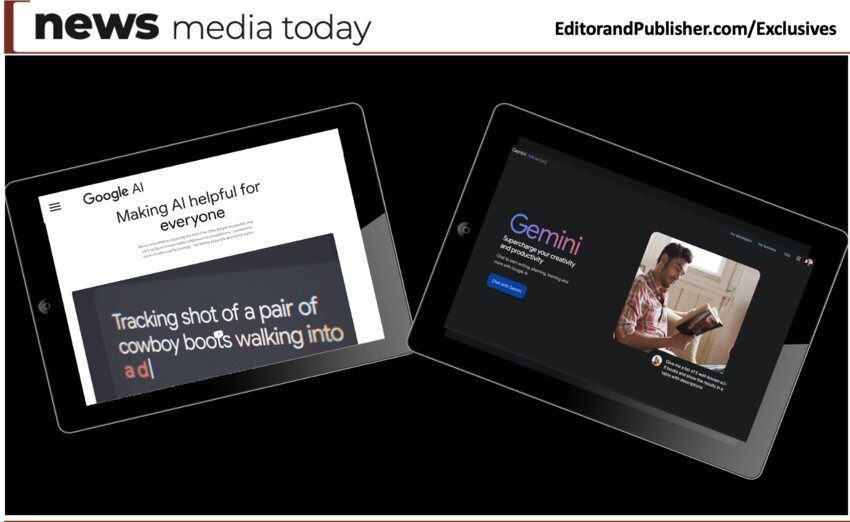
Launched quietly last month to a small section of users, AI Mode basically turns Google into a chatbot, able to answer long, detailed questions powered by the company’s Gemini 2.0 chatbot and the company’s all-powerful search index. It's a future that has the potential to rock the status quo of search traffic worldwide. So, how should newsrooms prepare?
more
Rob Tornoe | for E&P Magazine
|
4/11/25
|

|
There’s no point beating around the bush — social media is terrible. Not too long ago, news organizations viewed Facebook, Twitter and other platforms as a digital bridge to the future, a way to transform their 20th-century business model of printing information on paper into a 21st-century business operation. How times have changed …
more
|

|
AI in journalism has shifted from a disruptive threat to a practical tool, helping reporters work smarter without replacing them. While early fears of automation taking over newsrooms have faded, AI-powered tools are proving invaluable for tasks like transcription, data analysis, and investigative research. The challenge now is how journalists can harness AI’s potential while ensuring accuracy, credibility, and public trust in their reporting.
more
|
|
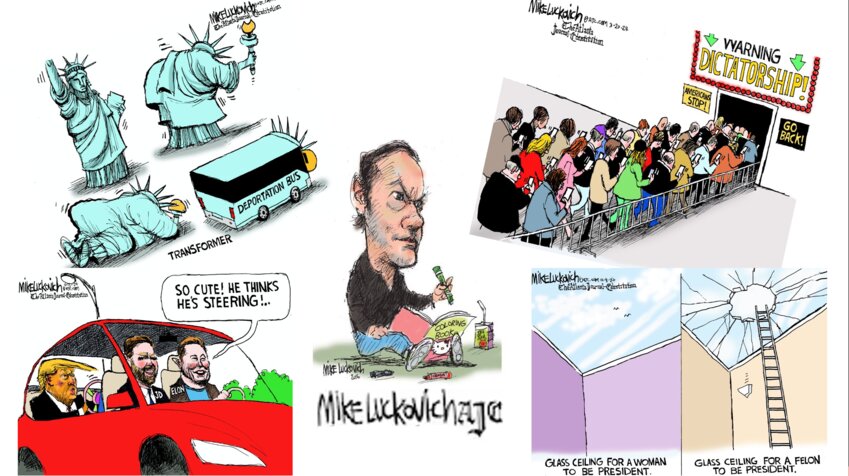
Mike Luckovich hasn’t felt the need to pull any punches during his three decades of drawing political cartoons for The Atlanta Journal-Constitution. But the two-time Pulitzer Prize-winning cartoonist admits even he’s a bit apprehensive as Donald Trump reoccupies the White House. He spoke with Editor & Publisher about his approach to drawing Trump, the difficulty finding an online audience for local cartoons and the current state of the profession.
more
Rob Tornoe | for E&P Magazine
|
1/16/25
|